 Save to Pinterest
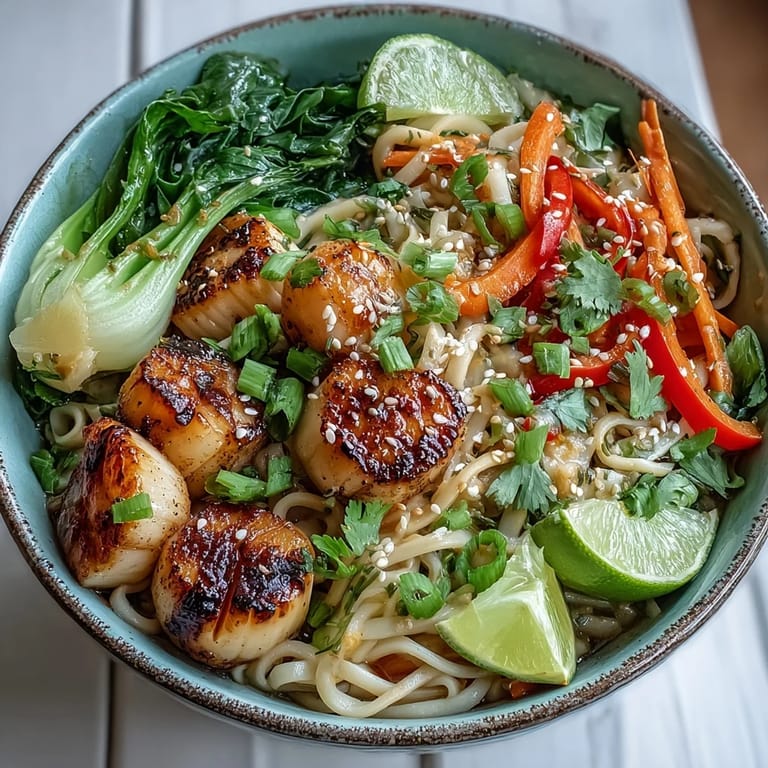
 There's something about the sizzle of ginger hitting hot oil that instantly transports me to a tiny noodle shop in Bangkok, even though I'm standing in my own kitchen. My first attempt at making this bowl happened on a Tuesday night when I was craving that exact sound, that exact smell, and I realized I had shrimp and scallops sitting in my fridge just waiting for their moment. The broth came together so naturally—salty, umami-rich, with that subtle heat lurking underneath—and suddenly I understood why this dish had become such a reliable comfort for me.
I made this for my sister's book club night when she asked me to bring something that felt special but wasn't fussy, and watching four people simultaneously close their eyes on that first spoonful was all the validation I needed. The way the noodles soaked up that golden broth, the way the shrimp stayed delicate against the silky scallops—it became the dish everyone texted about days later.
Ingredients
- Large shrimp, peeled and deveined (200 g): These need to be truly large so they stay tender and don't disappear into the broth.
- Sea scallops, cleaned and patted dry (200 g): Pat them completely dry or they'll steam instead of sear, and that dry surface is what keeps them from turning rubbery.
- Rice noodles or soba noodles (200 g): Rice noodles absorb broth beautifully, but soba adds a nuttier note if you're feeling adventurous.
- Carrot, julienned: Cut them thin enough to cook through in minutes but substantial enough to add sweetness and texture.
- Red bell pepper, thinly sliced: The color matters here—it transforms the bowl into something that looks as good as it tastes.
- Snow peas, trimmed (100 g): These cook so quickly that adding them late in the game keeps them snappy and bright.
- Baby bok choy, halved: The stems get tender while the leaves stay just slightly crisp, creating this perfect contrast.
- Spring onions, sliced: Save these for garnish because their fresh bite cuts through all that richness beautifully.
- Fresh ginger, grated (1 tablespoon): Grate it fresh—jarred ginger loses something essential that this broth absolutely needs.
- Garlic cloves, minced (2): The foundation of everything warm and aromatic that's about to happen in your pot.
- Low-sodium chicken or vegetable broth (1 liter): Low-sodium gives you control over the final flavor, which is everything when building something this delicate.
- Soy sauce (2 tablespoons): This is your umami anchor, the thing that makes people ask what's in here.
- Fish sauce (1 tablespoon): I know it smells like low tide, but trust it completely—it's the secret weapon.
- Sesame oil (1 tablespoon): Toasted sesame oil has a richness that neutral oil just can't match.
- Rice vinegar (1 tablespoon): The brightness that keeps everything from feeling heavy.
- Chili paste, optional (1 teaspoon): Add it if you want warmth, or leave it out for something more gentle.
- Fresh cilantro leaves, garnish: Either you love this herb or you don't, and there's no middle ground in my experience.
- Toasted sesame seeds, garnish: Toast them yourself if you have time—the difference is noticeable and worth it.
- Lime wedges, garnish: The final squeeze ties everything together in a way that feels almost magical.
Tired of Takeout? 🥡
Get 10 meals you can make faster than delivery arrives. Seriously.
One email. No spam. Unsubscribe anytime.
Instructions
- Get your noodles ready:
- Cook them according to the package, then drain and rinse with cold water until they're completely cool and separated. This prevents them from clumping together when you ladle the hot broth over them later.
- Build your flavor base:
- Heat sesame oil in a large pot over medium heat until it shimmers, then add your ginger and garlic. Let them perfume the oil for about a minute—you'll know it's ready when your kitchen smells incredible and the garlic just starts to turn golden at the edges.
- Simmer the broth:
- Pour in your broth along with soy sauce, fish sauce, and rice vinegar, then bring everything to a gentle simmer. Taste it now and adjust—this is your moment to make it yours before the vegetables go in.
- Cook the vegetables:
- Add carrots, bell pepper, snow peas, and bok choy to the simmering broth and let them cook for 3 to 4 minutes until they're just tender but still have a slight bite. You're going for cooked, not soft.
- Add the seafood with care:
- Gently slide in your shrimp and scallops, keeping the heat at a gentle simmer. After 2 to 3 minutes, they should be opaque and just cooked through—this is not the moment to look away, because 30 seconds too long and they'll toughen.
- Final seasoning:
- Taste everything and adjust with chili paste if you want heat, or a touch more fish sauce if it needs depth. This is your last chance to make it perfect.
- Assemble and serve:
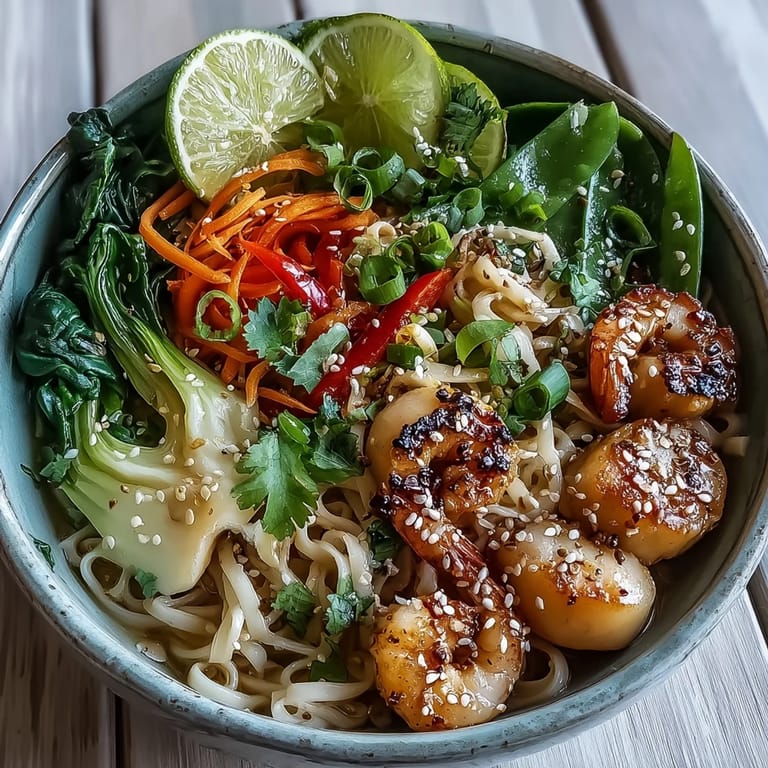
- Divide the cooled noodles among four bowls, then ladle the hot broth, seafood, and vegetables over top. Top with spring onions, cilantro, sesame seeds, and a squeeze of fresh lime.
 Save to Pinterest
 This bowl became something more than dinner the night I made it for myself after a particularly difficult day, sitting at my kitchen counter with nowhere to be. The warmth of the broth, the tenderness of the seafood, the layers of flavor that unfolded with each spoonful—it was the kind of meal that heals something you didn't know needed healing.
The Art of Not Overcooking Seafood
The line between perfectly cooked and rubbery seafood is thinner than you'd think, and it taught me to actually trust my instincts instead of watching the clock. Shrimp and scallops continue cooking slightly even after you remove them from heat, so pulling them out when they're 90 percent done is actually the right move. I used to cook everything until I was absolutely certain it was done, which meant everything ended up slightly tough—now I undercook by intention and it's changed everything.
Why Fresh Fish Sauce Matters Here
Fish sauce gets a terrible reputation because of its smell, but in a broth like this it becomes something entirely different—it adds depth that chicken broth alone simply can't achieve. The first time I made this without it, thinking I could skip that one ingredient, the whole bowl fell flat in a way I couldn't quite name. Once I added it back, everything clicked into place, and I realized that sometimes the ingredients that scare us most are exactly the ones we need.
Building Flavor Layers That Make People Wonder
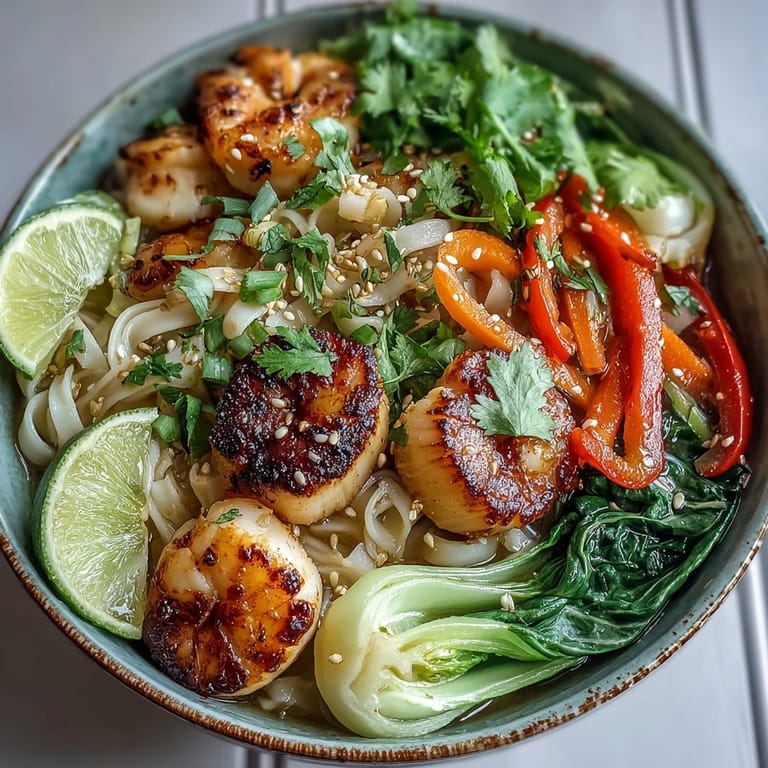
This broth works because it's not just salty—it's salty, funky, bright, and warm all at once, and those different notes make people taste something they can't quite identify. The soy sauce brings umami, the fish sauce adds complexity, the ginger and garlic add warmth, and the rice vinegar and lime juice keep everything from feeling heavy or one-dimensional. When someone asks what makes this taste like restaurant noodles, the answer is that there's no single ingredient doing the heavy lifting—it's the conversation between all of them.
- Toast your sesame seeds in a dry pan for two minutes before garnishing because the difference between toasted and untoasted is the difference between this tasting memorable and this tasting ordinary.
- Add a tiny pinch of chili paste even if you don't think you like heat, because just enough to make you notice without making you uncomfortable adds something almost magical.
- The lime wedge isn't optional—that final squeeze is what wakes up your palate and makes you want another spoonful immediately.
 Save to Pinterest
 This noodle bowl has become the meal I make when I want to feel like I'm taking care of myself, and somehow it always delivers exactly what I need. There's something about a bowl this beautiful, this flavorful, and this kind to your body that makes everything feel a little lighter.
Recipe Questions & Answers
- → Can I make this with different noodles?
Yes, you can substitute rice noodles or soba with udon, egg noodles, or even spaghetti. Adjust cooking time according to package instructions as different noodles require varying cook times.
- → How do I prevent overcooking the seafood?
Add shrimp and scallops during the last 2-3 minutes of simmering. Watch closely—seafood is ready when shrimp turn pink and scallops become opaque. Remove from heat immediately to maintain tenderness.
- → Can I prepare this in advance?
You can prep vegetables and broth components ahead. However, cook the seafood and assemble bowls just before serving to maintain optimal texture. Reheat broth gently before combining.
- → What vegetables work well in this bowl?
Beyond the suggested vegetables, try adding shiitake mushrooms, baby corn, snap peas, spinach, or bean sprouts. Adjust cooking times based on vegetable density—harder vegetables need longer simmering.
- → Is there a vegetarian option?
Simply omit the seafood and substitute with firm tofu cubes or tempeh. Use vegetable broth instead of chicken broth. Add extra vegetables for substance and consider mushrooms for umami depth.
- → How spicy is this dish?
The base version is mild with just gentle warmth from ginger and garlic. Add chili paste to taste—start with 1/2 teaspoon and adjust according to your spice preference for custom heat levels.