 Save to Pinterest
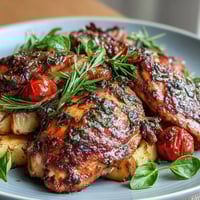
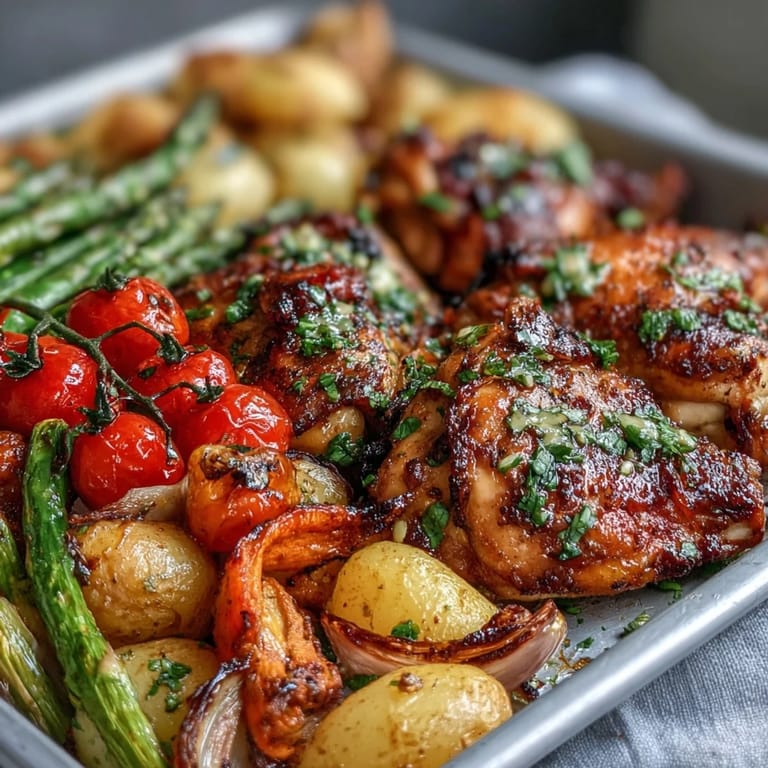
 There's something magical about throwing everything onto one pan and walking away while the oven does the heavy lifting. I discovered this sheet pan method during a particularly chaotic Tuesday when I had fifteen minutes before guests arrived and zero energy for complicated cooking. The chicken came out impossibly juicy, the vegetables had caramelized at the edges, and somehow it tasted like I'd spent hours in the kitchen instead of barely fifteen minutes prepping.
I made this for my sister who'd just started eating healthier, and she couldn't believe something this colorful and delicious could fit into her new routine. Watching her face light up when she took that first bite of perfectly roasted chicken with caramelized vegetables reminded me that healthy food doesn't have to taste like punishment. Now it's become our standing Friday night dinner when we want something that feels like self-care.
Ingredients
- Boneless, skinless chicken breasts: Pat them dry before coating with marinade so they develop a nice exterior; don't skip this small step because it changes everything about the texture.
- Asparagus: Buy firm, bright green stalks and trim the woody ends by snapping them naturally where they want to break.
- Cherry tomatoes: Halving them prevents them from rolling around the pan and helps them cook evenly with everything else.
- Sugar snap peas: These stay crisp-tender if you don't overcrowd the pan, and they add the sweetest pop of flavor.
- Baby carrots: Halving them lengthwise means they cook in the same time as everything else instead of staying crunchy.
- Red onion: The slight sweetness balances the brightness of the lemon beautifully.
- Yellow bell pepper: Adds color and a gentle sweetness that rounds out the whole dish.
- Olive oil: Use your decent quality oil here because you taste it directly; cheap oil makes the whole thing taste flat.
- Fresh lemon juice: Never use the bottled stuff for this; real lemon juice is what makes the vegetables sing.
- Garlic: Mince it finely so it distributes evenly through the marinade without any raw, harsh spots.
- Dijon mustard: This emulsifies the oil and lemon, creating a dressing that actually clings to everything instead of pooling.
- Honey: One teaspoon is barely noticeable but it rounds out the acidity and deepens the roasted flavors.
- Dried oregano and thyme: These are the backbone of the flavor profile, so don't skimp on the quantities.
- Fresh parsley: Finish with this green brightness to remind everyone why they love spring vegetables.
Tired of Takeout? 🥡
Get 10 meals you can make faster than delivery arrives. Seriously.
One email. No spam. Unsubscribe anytime.
Instructions
- Fire up your oven and prep your pan:
- Set your oven to 425°F and let it fully preheat while you work, which usually takes about ten minutes. Line your sheet pan with parchment paper so cleanup becomes almost painless.
- Make your magic marinade:
- Whisk together the olive oil, lemon juice, garlic, mustard, honey, oregano, thyme, salt, and pepper in a small bowl until it looks emulsified and smells incredible. Taste it quickly and adjust the seasoning because this is where all your flavor comes from.
- Coat your chicken:
- Pat your chicken breasts dry with paper towels, then brush them generously with half the marinade, making sure to coat both sides evenly. This moisture will help them stay juicy while the oven does its work.
- Toss your vegetables with intention:
- Put all your prepped vegetables in a large bowl and pour the remaining marinade over them, then toss until every piece glistens with that lemon-herb coating. Don't be shy; make sure nothing is hiding uncoated at the bottom.
- Arrange everything on the pan:
- Nestle the chicken breasts in the center of your sheet pan, then scatter all the vegetables around them in a single layer where they can actually roast instead of steam. Leave a little space between pieces so the heat can circulate and work its magic.
- Roast until golden and cooked through:
- Slide the pan into your preheated oven for 25 to 30 minutes, checking around the 20-minute mark to see how things are progressing. The chicken is done when it reaches an internal temperature of 165°F and the vegetables have caramelized at their edges.
- Let it rest before serving:
- Pull the pan from the oven and give the chicken five minutes to rest; this keeps it tender and juicy instead of stringy. While you wait, do a quick taste of a vegetable to make sure the seasoning satisfies you.
- Finish with fresh herbs and brightness:
- Sprinkle everything with chopped fresh parsley and serve with lemon wedges so people can add as much brightness as they want. The green herb against the golden roasted vegetables is almost as important as the flavor it brings.
 Save to Pinterest
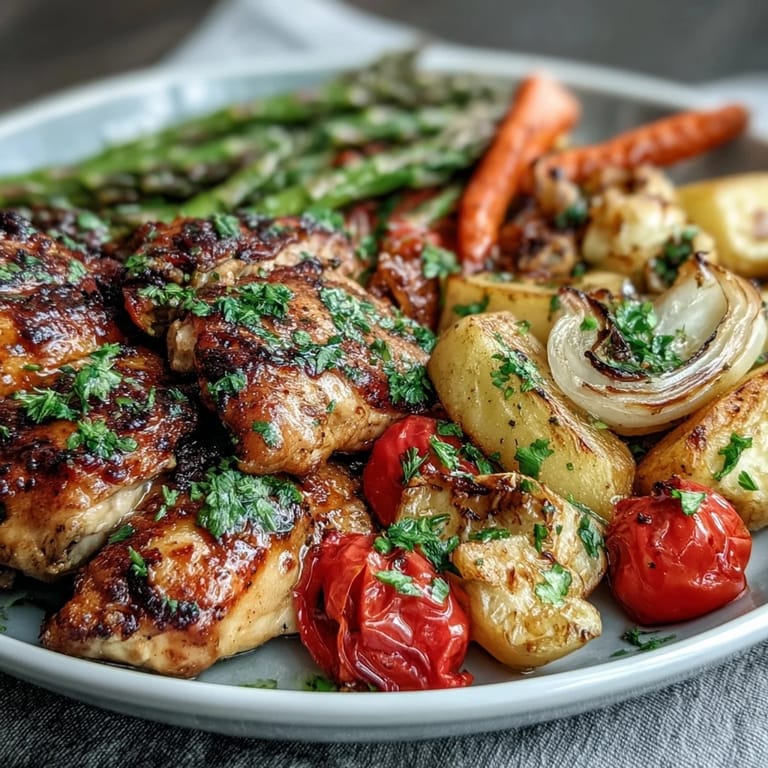
 Last spring my neighbor smelled this cooking through our shared wall and came over asking what that incredible aroma was. By the time dinner was ready, somehow she'd ended up at our table, and we spent the evening talking about vegetables and what a difference fresh herbs make. That's when I realized this isn't just a weeknight dinner hack; it's become my go-to recipe for making people feel nourished and welcome.
Why Sheet Pan Cooking Changed My Weeknights
There's a philosophy to sheet pan dinners that extends beyond just convenience. You're essentially caramelizing proteins and vegetables together, which means they all pick up flavor from the same source and cook in harmony instead of against each other. The chicken releases its juices onto the pan, which the vegetables catch and absorb, creating this complex depth you can't achieve by cooking everything separately.
Playing with Spring Vegetables and Seasons
What makes this recipe so versatile is that spring changes depending on where you live and when you're cooking it. I've made this with baby zucchini, radishes, fresh peas still in their pods, and even early potatoes when I'm feeling less strict about carbs. The technique stays exactly the same; you just adjust your cooking time slightly if you're using something denser like potatoes, which might need an extra ten minutes.
Flavor Building Blocks and Why They Matter
This marinade works because it has every flavor category covered: brightness from lemon, umami from mustard and garlic, earthiness from the herbs, and a whisper of honey to round everything out. You could swap thyme for rosemary or add a pinch of red pepper flakes if you like heat, but the structure itself is what makes even simple ingredients taste sophisticated. The beauty is that nothing overpowers the fresh taste of spring vegetables, which is really the star here.
- If you want extra richness, crumble some feta or goat cheese over the top right before serving and let it warm slightly.
- Make double the marinade if you're cooking for more people and want extra sauce to drizzle over everything at the end.
- This reheats beautifully, so you can make it for meal prep and eat it cold later if you're in a rush.
 Save to Pinterest
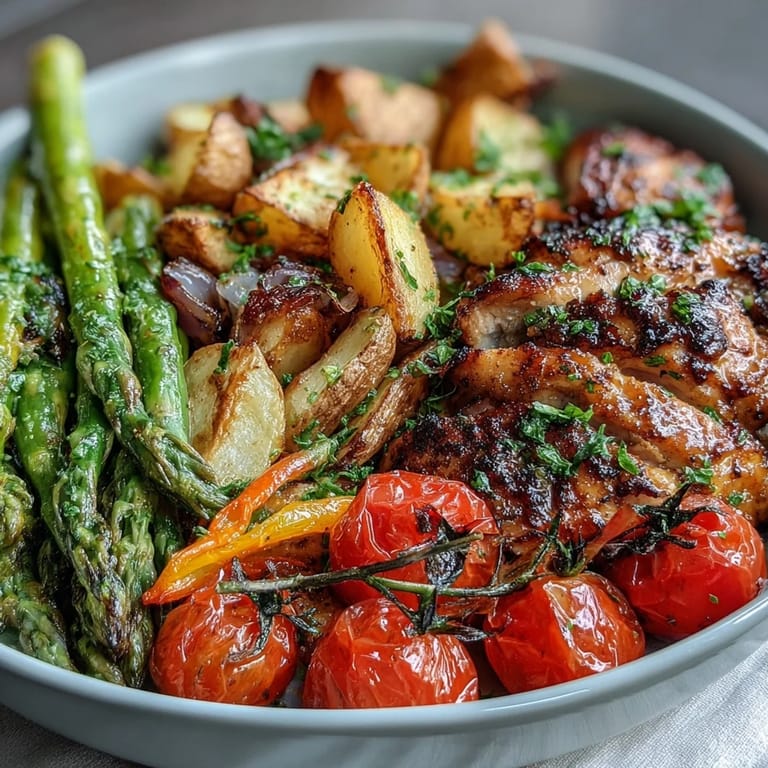
 This recipe has become my answer to the question of how to make healthy food that tastes like something you actually want to eat. Once you nail this technique, you'll find yourself reaching for it again and again.
Recipe Questions & Answers
- → Can I use chicken thighs instead of breasts?
Yes, boneless, skinless chicken thighs can be substituted for breasts. Adjust cooking time as thighs may require a few minutes longer to cook through.
- → What vegetables work best for this dish?
Spring vegetables like asparagus, cherry tomatoes, sugar snap peas, baby carrots, red onion, and bell peppers enhance flavor and texture. You can also add zucchini or radishes for variety.
- → Is this dish gluten-free?
Yes, the ingredients used are naturally gluten-free. Just ensure any store-bought condiments like Dijon mustard do not contain gluten.
- → How do I ensure chicken is fully cooked?
Roast until the chicken reaches an internal temperature of 165°F (74°C), which ensures it is safe and juicy.
- → Can I prepare the marinade in advance?
Absolutely, the marinade can be mixed ahead of time to save prep work. Just keep it refrigerated until ready to use.