 Save to Pinterest
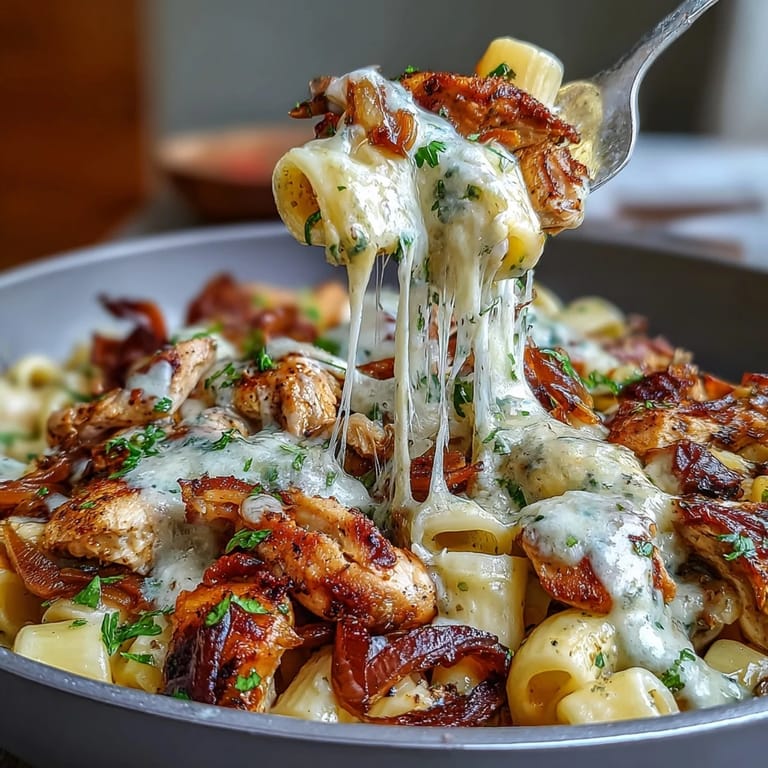
 My sister called me in a panic one October evening, saying she'd made French onion soup but ruined it somehow, and could I salvage dinner for her guests arriving in an hour. I started rummaging through her pantry and found pasta, chicken, and that golden pot of caramelized onions she'd been nursing all afternoon. What emerged from combining them felt like stealing the best parts of two dishes and making something entirely new, something that tasted like comfort wrapped in cheese and broth. Her guests never knew it was improvised, and honestly, I've made it intentionally ever since.
There's something about watching caramelized onions fold into hot pasta and melted Gruyère that makes you feel like you've mastered something. A friend once told me she'd only ever had French onion soup at a bistro, convinced it required special equipment and training, so when I made this for her one cold November night, her surprise at how approachable it was made the whole thing worthwhile. She's made it four times since then and texts me photos like she's invented it herself.
Ingredients
- Boneless, skinless chicken breasts: Cut into bite-sized pieces so they cook evenly and distribute throughout the pasta without dominating any single bite.
- Yellow onions: The foundation of everything here—thinly slice them and be patient with the caramelization, as rushing this step steals the soul of the dish.
- Fresh thyme: If you have it, use it; dried works in a pinch, but fresh thyme releases oils that make the aromatics sing in a way that matters.
- Short pasta: Penne, fusilli, or rigatoni all work beautifully because they catch the broth and cheese instead of sliding through.
- Beef or chicken broth: Go low-sodium so you're seasoning as you cook, not fighting over-salted broth at the end.
- Dry white wine: Optional but recommended—it adds a slight acidity that keeps the richness from feeling heavy.
- Unsalted butter and olive oil: The butter browns the chicken and starts the onion magic; the olive oil prevents scorching.
- Gruyère cheese: This is where the flavor deepens; don't substitute with generic cheddar or you'll notice the difference immediately.
- Mozzarella and Parmesan: Mozzarella melts into silky creaminess while Parmesan adds a sharp, salty edge that balances everything.
Tired of Takeout? 🥡
Get 10 meals you can make faster than delivery arrives. Seriously.
One email. No spam. Unsubscribe anytime.
Instructions
- Sear the chicken until golden:
- Heat oil and a tablespoon of butter in your Dutch oven over medium heat, then add the chicken pieces seasoned generously with salt and pepper. Let them sit undisturbed for a minute or two to develop that golden crust, then stir and cook through, about 6 to 8 minutes total until there's no pink inside when you cut into the largest piece.
- Caramelize the onions low and slow:
- This is where patience becomes a virtue—add the remaining butter and sliced onions with a pinch of salt, then reduce heat to medium-low and stir frequently for 20 to 25 minutes until they've transformed from crisp and sharp to soft, golden, and sweet-tasting. The longer you go, the deeper the color and flavor; there's almost no such thing as too caramelized here.
- Build the aromatic base:
- Add your minced garlic and thyme, stirring for about a minute until the kitchen smells like a French bistro and you feel like you're cooking something special. This brief moment of high heat releases all those fragrant oils without burning anything.
- Deglaze and reduce the wine:
- Pour in the white wine if using it, and use a wooden spoon to scrape up all those brown bits stuck to the bottom—that's pure flavor. Let it bubble away for 2 to 3 minutes until it reduces by about half and the alcohol cooks off, leaving behind something mellow and aromatic.
- Combine chicken, pasta, and broth:
- Return the cooked chicken to the pot, then add your uncooked pasta and all the broth, stirring everything together. Bring it to a boil, then immediately lower the heat and let it simmer, uncovered or covered depending on whether liquid is evaporating too quickly.
- Cook until pasta is tender and creamy:
- This takes about 10 to 12 minutes, and you'll notice the liquid gradually soaks into the pasta while the pasta releases its starches, creating a naturally creamy sauce. Stir occasionally so nothing sticks to the bottom, and taste a piece of pasta to ensure it's tender but not mushy.
- Melt in the cheese for richness:
- Remove from heat, then stir in the shredded Gruyère and mozzarella, letting them soften and distribute evenly through the warm pasta. Taste and adjust salt and pepper, remembering that you'll add more cheese on top, so don't over-season now.
- Finish with Parmesan and optional broil:
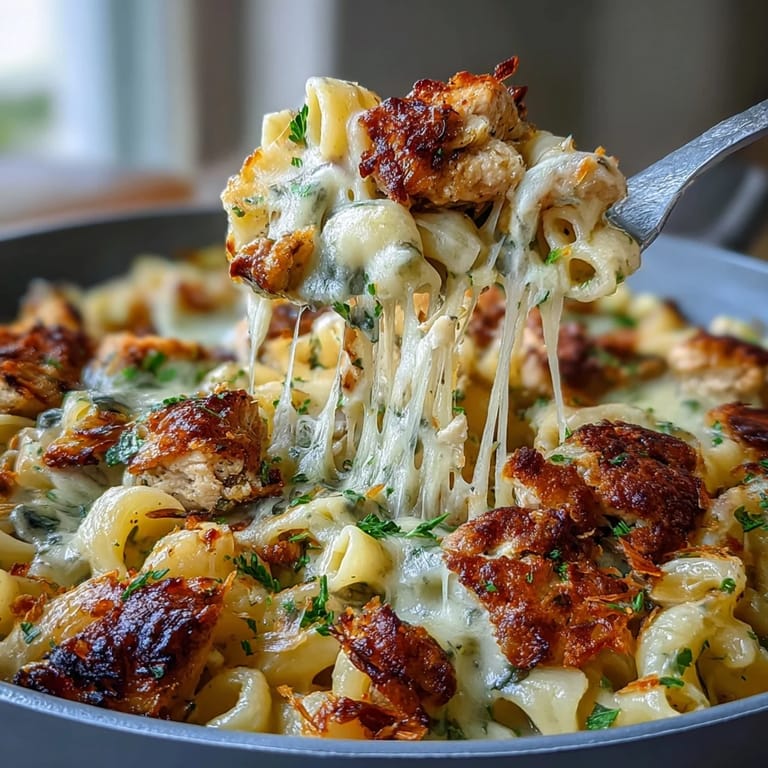
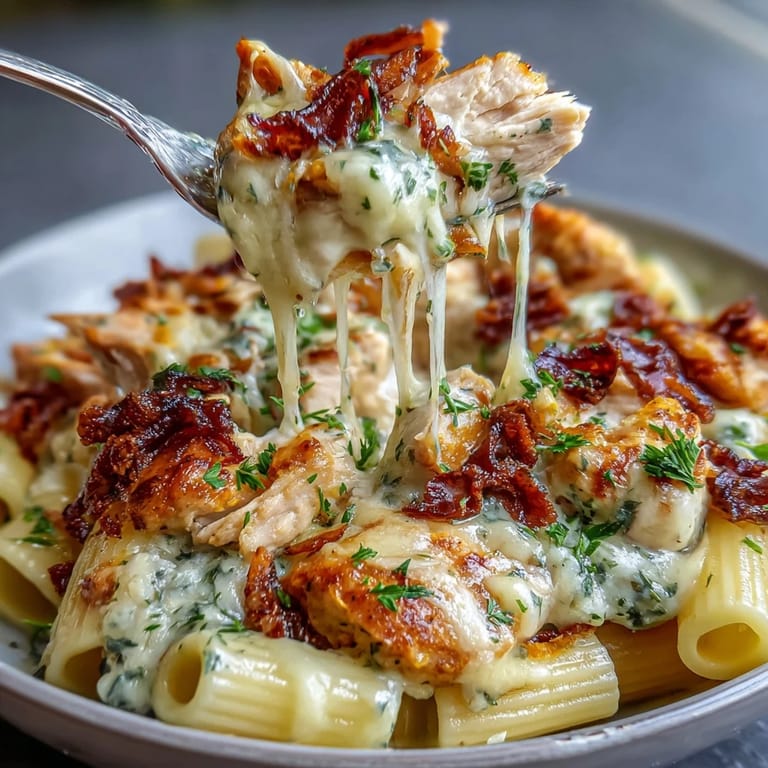
- Sprinkle Parmesan over the top, then if you want that restaurant-style finish, transfer the pot under the broiler for 2 to 3 minutes until the top turns golden and bubbly. Watch it carefully so the Parmesan browns without burning.
 Save to Pinterest
 I made this for my mother-in-law on a rainy Sunday when she was visiting, and watching her take that first spoonful and close her eyes while saying nothing—just pure, quiet satisfaction—reminded me that cooking isn't about impressing anyone, it's about feeding the people you care about something that makes them feel seen. She asked for the recipe that night, and I knew I'd created something worth sharing.
The Secret of Caramelized Onions
Caramelization isn't complicated, but it does require attention and time. The onions start out pungent and sharp, then gradually soften and release their natural sugars, developing a complex sweetness that's absolutely foundational to this dish. I used to think I was doing something wrong when the onions seemed to take forever, but that's exactly the point—the slowness is what creates depth. Once you've caramelized onions properly, you'll understand why they're considered a building block of French cooking, and you'll start using them in soups, on burgers, and stirred into scrambled eggs.
Making It Your Own
This recipe is flexible in ways that feel genuine rather than forced. You can use Swiss or Emmental instead of Gruyère if that's what's in your cheese drawer, and honestly, the dish still works beautifully. Some nights I've added mushrooms because I had them, or a splash of cream when I wanted something even richer, or extra thyme because I was feeling herbaceous. The structure—caramelized onions, chicken, pasta, broth, cheese—is solid enough to support your variations without falling apart.
Pairing and Serving Ideas
Serve this hot in bowls rather than plates, because there's enough creamy broth that you'll want something to contain it, and eating it this way feels cozier anyway. A crisp green salad on the side cuts through the richness perfectly, and a glass of Chardonnay or even a light Pinot Grigio pairs beautifully without overwhelming the delicate balance of flavors. If you're cooking for people who love bread, don't hesitate to have some crusty baguette nearby for soaking up the last bits of sauce.
- Let the dish rest for a minute or two after plating so the cheese sets slightly and everything stays in your bowl instead of sliding onto the table.
- Garnish with fresh thyme or parsley if you have it, because a little green on top makes everything feel more intentional and restaurant-worthy.
- This reheats beautifully the next day—add a splash of broth and warm gently on the stovetop to bring it back to life without breaking the cheese.
 Save to Pinterest
 This dish has become my answer to 'what should we make tonight?' on days when the weather turns cold and everyone needs something warm and deeply satisfying. It's the kind of recipe that feels like a hug in a bowl.
Recipe Questions & Answers
- → Can I use other types of pasta?
Yes, short pasta like penne, fusilli, or rigatoni work best as they hold the sauce well and cook evenly in one pot.
- → How do I achieve perfectly caramelized onions?
Cook onions slowly over medium-low heat, stirring often until deeply golden and sweet, about 20–25 minutes.
- → Is it necessary to use white wine?
White wine adds a subtle acidity and depth, but you can substitute with extra broth if preferred.
- → What cheeses can be used as alternatives?
Swiss or Emmental cheeses can replace Gruyère for a similar creamy and nutty flavor.
- → Can this dish be made vegetarian?
Omit chicken and use vegetable broth to keep the savory and rich flavor profile suitable for vegetarians.
- → How should leftovers be stored?
Store in an airtight container in the refrigerator for up to 3 days. Reheat gently to maintain creaminess.