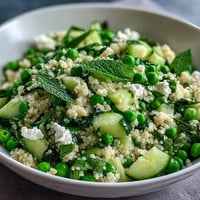
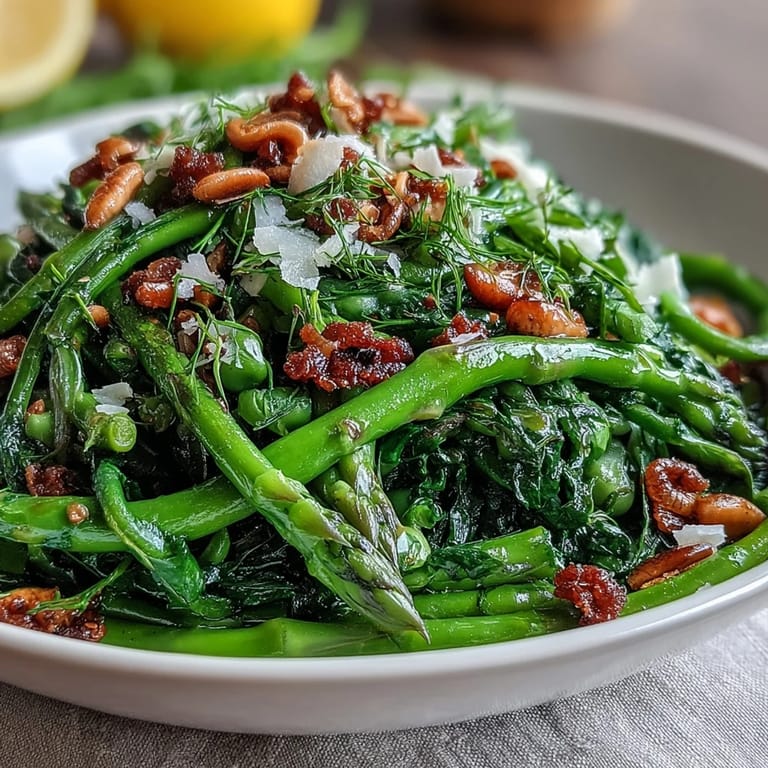
 Save to Pinterest
 Last spring, I was standing at the farmer's market on a Saturday morning when the smell of fresh earth and rain hit me—asparagus bundles were stacked high, their tips practically glowing green. A woman next to me grabbed a bunch and mentioned she'd been shaving them thin, and something about that simple technique stuck with me. That afternoon, I pulled out my vegetable peeler and realized I'd been missing an entire dimension of this vegetable: tender ribbons that catch dressing like nothing else. This salad was born from that moment of trying something different, and it's become the dish I make when spring finally feels real.
I made this for a potluck on a sunny April evening, bringing it in a big glass bowl so everyone could see the vibrant greens and pinks. One of my friends—someone who usually reaches for heavier sides—went back for seconds, then thirds, and spent the whole night asking about the dressing. Watching people genuinely surprised by how much they loved a salad was one of those small kitchen wins that reminded me why I keep trying new things.
Ingredients
- Fresh asparagus (1 bunch, about 300 g): Use the vegetable peeler to create delicate ribbons that'll soak up all that lemon dressing—woody ends removed, of course, unless you enjoy gnawing on bitter stems.
- Green peas (1 cup): Fresh or frozen both work beautifully; frozen ones are sometimes sweeter and more convenient, honestly.
- Baby arugula or mixed spring greens (2 cups): These greens provide a peppery backdrop that lets the asparagus shine without fighting for attention.
- Radishes (2, thinly sliced): Don't skip these—they add a crisp bite and pretty pink circles that make the whole bowl more interesting.
- Shaved Parmesan cheese (1/4 cup): Use a vegetable peeler or microplane to create thin, delicate shards that melt slightly into the warm salad.
- Toasted pine nuts or slivered almonds (1/4 cup): Toast them yourself if you have time; it takes five minutes and makes a real difference in how they taste and crunch.
- Extra-virgin olive oil (3 tbsp): This is where quality matters—use something you'd actually taste on its own, not the bottom-shelf stuff.
- Freshly squeezed lemon juice (2 tbsp): Bottled lemon juice has never made anyone happy; fresh is the whole point here.
- Lemon zest (1 tsp): That bright, fragrant yellow stuff that makes people wonder why their dressing tastes better than yours.
- Honey or maple syrup (1 tsp): Just enough sweetness to balance the sharpness of the lemon and mustard without making it dessert.
- Dijon mustard (1 tsp): This tiny bit emulsifies the dressing and adds a subtle warmth that ties everything together.
- Sea salt (1/2 tsp) and black pepper (1/4 tsp): Season to taste at the end; these amounts are just a starting point.
Tired of Takeout? 🥡
Get 10 meals you can make faster than delivery arrives. Seriously.
One email. No spam. Unsubscribe anytime.
Instructions
- Shave the asparagus into ribbons:
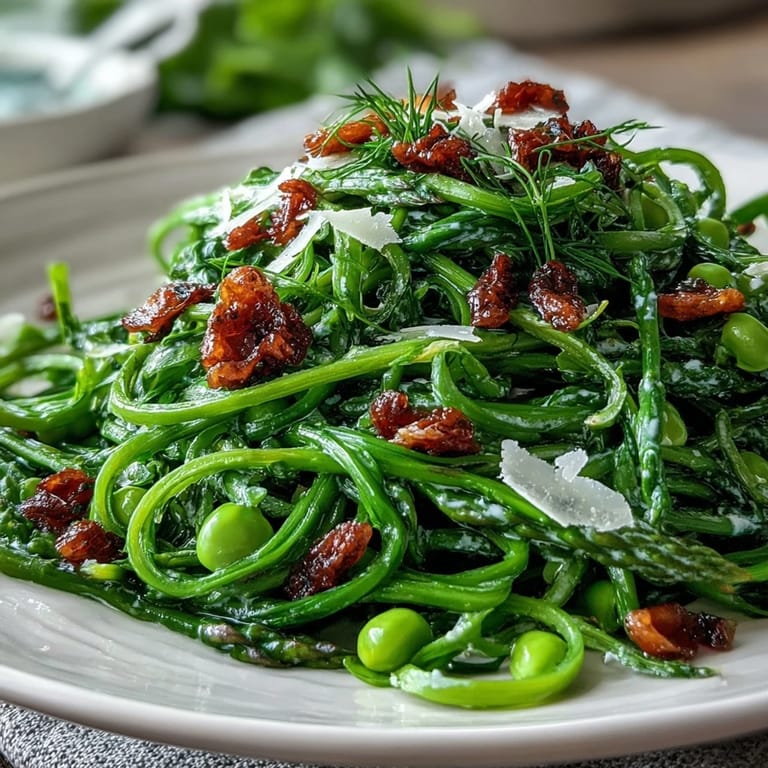
- Hold a spear flat on your cutting board and run your vegetable peeler lengthwise along it, like you're peeling a carrot. You'll hear this gentle scraping sound and watch these perfect thin ribbons fall into your bowl—it's honestly satisfying.
- Build your salad base:
- Add the peas, greens, and radish slices to the bowl with your asparagus. Gently toss everything together so it's evenly distributed and ready to drink in that dressing.
- Make the lemon dressing:
- In a separate small bowl, whisk together the olive oil, lemon juice, zest, honey, mustard, salt, and pepper until it looks creamy and slightly thickened. This is the emulsification moment—don't rush it; give it about 30 seconds of real whisking.
- Dress and toss:
- Drizzle the dressing over your salad and toss gently so every leaf and ribbon gets a light coating. Be gentle here; you're not trying to bruise anything, just distribute the flavor evenly.
- Top and serve:
- Scatter the shaved Parmesan and toasted nuts over the top, or toss them in lightly—whatever feels right. Serve immediately while everything is crisp and the flavors are singing.
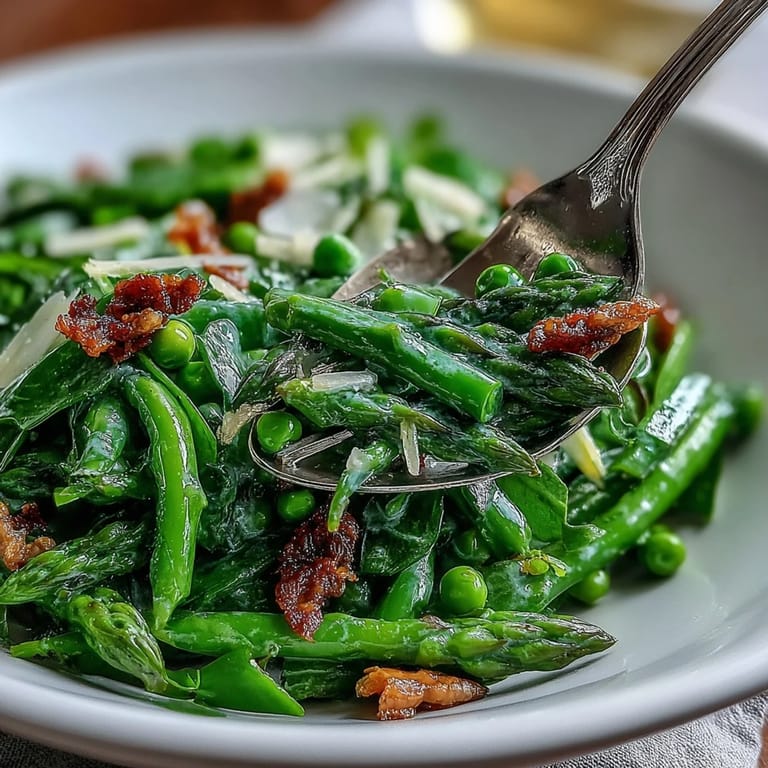 Save to Pinterest
 There's something about eating something this fresh and alive that changes your mood, especially when you've been stuck inside all winter. I've found myself making this salad whenever I need to feel like myself again, or when someone I care about needs reminding that spring actually arrived.
Why Fresh Lemons Really Matter
I once made this with bottled lemon juice while visiting my sister, thinking nobody would notice, and the whole thing tasted flat and one-dimensional. When I remade it an hour later with fresh lemons from her tree, both of us actually stopped mid-bite and smiled. That zest, that real lemon flavor—it's not a small detail, it's the entire point of this salad.
Variations That Work
This salad is flexible in the best way. I've made it with blanched fava beans instead of peas, added thin ribbons of zucchini, swapped mint for basil, and even thrown in some crumbled feta when I didn't have Parmesan. Each version tastes like spring but feels like my own choice in the moment. The core—that bright lemon dressing—holds everything together no matter what vegetables you're actually working with.
Serving Suggestions and Timing
This salad sits beautifully alongside grilled fish or chicken if you want to turn it into a fuller meal, but honestly, I love it just as it is on warm afternoons when heavy food feels wrong. Make all your components ahead of time if you need to—shave your asparagus in the morning, toast your nuts, whisk your dressing—then assemble everything right before you eat. It takes two minutes to come together and about five seconds to disappear from your plate.
- Pair with grilled salmon, herbed chicken, or shrimp for a complete meal that still feels light.
- Make double the dressing because you'll want extra to drizzle over leftovers (even though there usually aren't any).
- Serve this on your nicest plates because it's as pretty as it is delicious.
 Save to Pinterest
 This salad taught me that sometimes the simplest changes in technique create the biggest shifts in how food tastes. Spring in a bowl is really just about paying attention to what's fresh and treating it with a little care.
Recipe Questions & Answers
- → How do I shave asparagus easily?
Use a vegetable peeler to create thin, ribbon-like slices starting from the thicker end of the stalks. This technique helps retain the asparagus texture and enhances presentation.
- → Can I substitute fresh peas with frozen ones?
Yes, thawed frozen peas work well and provide similar sweetness and texture without compromising freshness in the salad.
- → What dressings pair well with shaved asparagus and pea salads?
Light citrus-based dressings, such as lemon with olive oil and a touch of honey and mustard, complement the vegetables, enhancing their natural flavors.
- → Are there good alternatives to Parmesan in this salad?
Shaved pecorino offers a similar sharpness, or for dairy-free options, omit cheese or use plant-based alternatives without overpowering the salad.
- → What nuts work best for texture and flavor here?
Toasted pine nuts or slivered almonds add a delicate crunch that balances the softness of the vegetables and freshness of the dressing.