 Save to Pinterest
 Last March, my neighbor knocked on my door with that familiar excited energy she gets around St. Patrick's Day, asking if I'd help her put together something green for her family gathering. I'd never actually made a full board before, just thrown together whatever was in the fridge. Standing in her kitchen that afternoon, surrounded by kiwis and snap peas and about five different shades of green produce, I realized how much fun it could be to think of a board as a canvas rather than just a platter. Two hours later, watching her kids gravitate toward it like it was the most festive thing they'd ever seen, I understood why people get so excited about these things.
My sister brought this board to her daughter's school St. Patrick's Day party, and a kid whose family is allergic to nearly everything suddenly had an entire section he could actually eat. Watching his face light up when he realized the snap peas and apple slices were all for him made me see this board differently—it's not just about the holiday, it's about making space for everyone at the table.
Ingredients
- Green grapes: They're nature's little snack, sweet and seedless, and they catch light beautifully on the board so everything looks more abundant than it actually is.
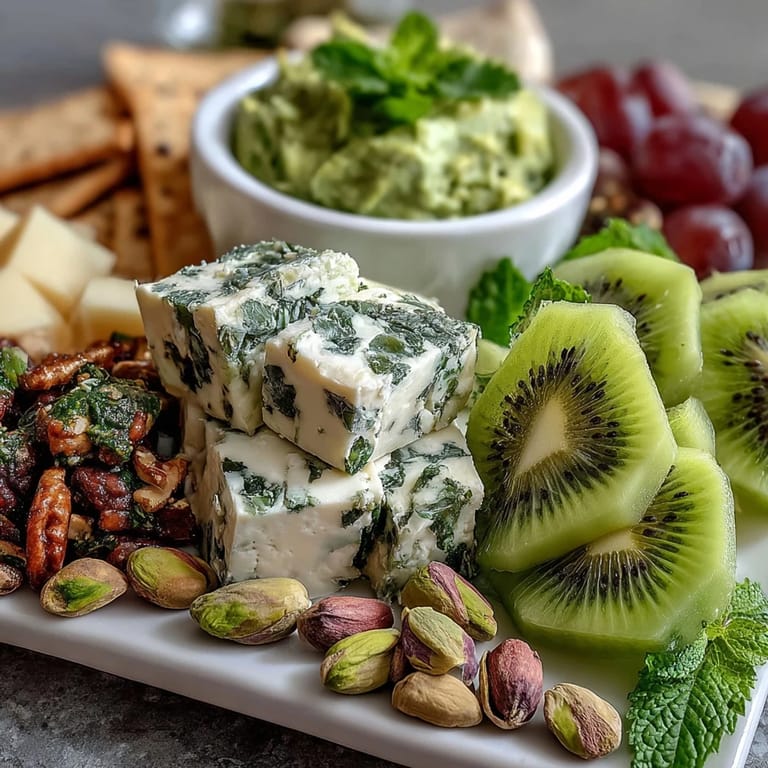
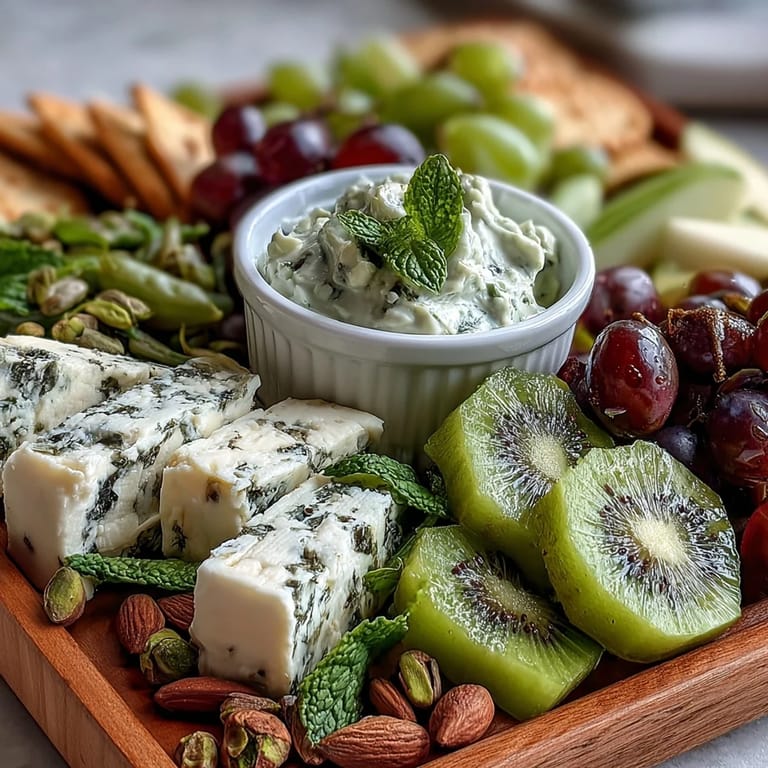
- Kiwis: Slice them just before serving or they'll weep a bit of juice, which sounds dramatic but it's true—that golden-green interior is stunning though, so the timing matters.
- Green apple: A tart variety like Granny Smith keeps its crunch longer and won't brown as quickly, making your board stay fresh-looking through the whole party.
- Honeydew melon: Cut it into cubes the morning of or the night before and store them in a container; they're forgiving and actually taste better if they've had time to chill properly.
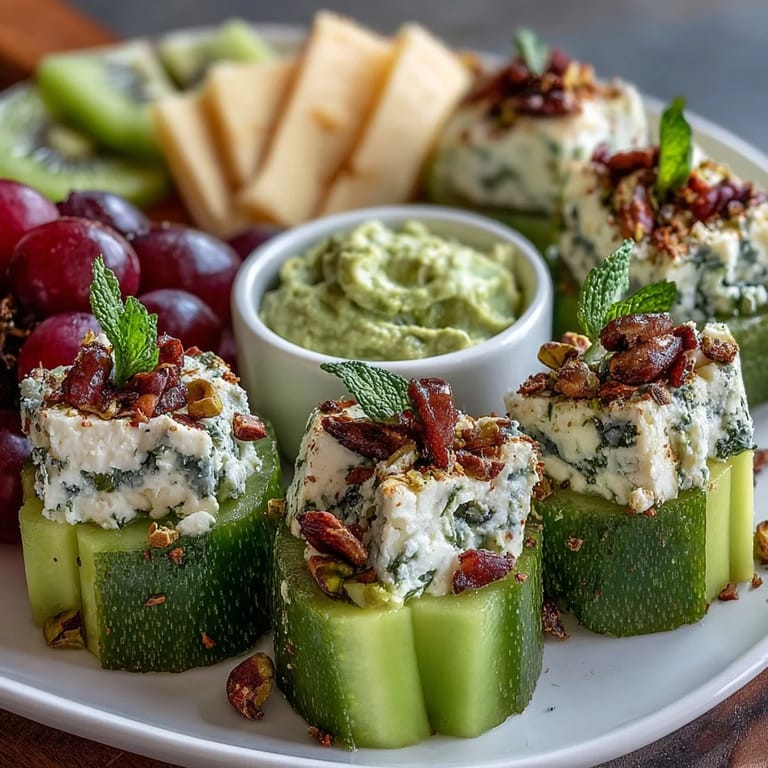
- Cucumber: English cucumbers have thinner skin and fewer seeds, which means less watery slices and a cleaner look overall.
- Sugar snap peas: Raw and snappy is their whole personality, and they're one of the few vegetables people actually reach for first, so don't skimp on the quantity.
- Broccoli florets: Blanch them for two minutes if you want them softer, but honestly raw is crunchier and more photogenic, which matters on a board.
- Celery sticks: Cut them into batons and soak them in ice water for an hour before the party—they'll be so crisp it's almost aggressive.
- Green bell pepper strips: The sweetness is subtle but real, and the strips are less likely to dry out than most raw vegetables.
- White or Irish cheddar: Cubed larger than you think looks right because they need to be substantial enough to feel like a real bite, not a sad little morsel.
- Herbed cream cheese or Boursin: This does double duty as both a dip and a spread, which sounds simple but saves you from cluttering the board with extra bowls.
- Guacamole or avocado dip: Make or buy it the day of because avocado waits for no one, and brown spots ruin the whole green aesthetic you're working toward.
- Ranch or green goddess dressing: The goddess version feels more intentional for this specific board, but use what you have and what tastes good to you.
- Green tortilla chips or veggie chips: These anchor the savory side and give texture contrast to all the soft and fresh elements.
- Wasabi peas: They're spicy little heat bombs that make people react audibly, which adds energy to any gathering if that's your vibe.
- Green olives: Pitted is non-negotiable here because nobody wants a surprise pit moment during a party, and the brine brings umami depth.
- Pistachios: The natural shells add visual interest and they're already salted so they punch above their weight in flavor.
- Green gummy candies or chocolate-covered mint candies: These are the garnish that makes it feel intentional and festive, not an afterthought or a mistake.
- Matcha chocolate or mint chocolate squares: They add another texture layer and satisfy the person who came for something sweet without having to leave the board.
Tired of Takeout? 🥡
Get 10 meals you can make faster than delivery arrives. Seriously.
One email. No spam. Unsubscribe anytime.
Instructions
- Prep everything first, then arrange nothing:
- Wash and dry all your fruits and vegetables the moment you get home—they absorb water like sponges and wet produce won't look as crisp or appetizing. Slice the delicate items like kiwi and apple just before you start building so they don't oxidize and turn brown at the edges, which reads as careless even though it's just chemistry.
- Start with a base vision:
- Lay out your largest board or platter and think of it like zones—fruit over here, vegetables in this area, cheeses in their own section. This isn't rigid, but having some structure means guests can navigate with confidence and won't just stand there staring.
- Build in layers and heights:
- Don't lay everything flat like a sad salad—prop broccoli florets upright, stand apple slices up against each other, let elements have dimension. The 3D effect makes a board look intentional and generous instead of minimal, and it genuinely does taste different when there's visual excitement.
- Position your dips strategically:
- Arrange small bowls or ramekins in the gaps between the major ingredients, and if you're using herbed cream cheese, dollop small amounts directly onto the board so people can taste it without getting a separate utensil. This sounds like efficiency but it's actually kindness toward your guests.
- Fill negative space with snacks:
- Once the fresh items are down, scatter tortilla chips, olives, and pistachios into the empty spots—they'll make everything look abundant and give people more options. Leave a few gaps though, because a completely packed board feels aggressive instead of inviting.
- Finish with sweets and garnish:
- Sprinkle the candy and chocolate squares across the top like you're decorating a cake, then add fresh herbs like mint or parsley if you have them—it softens the sweetness and adds a living green element. Step back and look at it for a second; if something feels visually off, move it, because this is the one moment you get to adjust before people descend.
- Keep it cold until guests arrive:
- If your party isn't for a few hours, cover the board loosely with plastic wrap and refrigerate it—everything will stay crisper and the colors will stay more vibrant. The moment before people arrive, pull it out and let it sit on the counter for five minutes so nothing is tooth-shatteringly cold.
 Save to Pinterest
 There's something quietly powerful about watching people slow down at a board like this—they pick things up, they try combinations they wouldn't normally eat, they actually talk to each other instead of just existing in the same room. That's when I stopped thinking of it as just a St. Patrick's Day thing and started thinking of it as an excuse to gather people around something beautiful.
Making It Look Effortless
The secret I've learned is that boards look best when they feel curated but not fussed over, like you grabbed good things from good places and arranged them with intention but not obsession. Odd numbers work better than even ones—three piles of pistachios scattered around feels more natural than two perfectly symmetrical mounds. Vary your cutting styles too: some slices, some chunks, some whole items, because that visual variety is what makes people believe you spent more time on it than you did.
Customizing for Your Crowd
I've learned to ask people what they actually eat before I build a board, because someone's dietary needs aren't a limitation—they're an invitation to be more creative. A vegan version becomes its own thing: cashew cheese, hummus, avocado-based dips, nutritional yeast sprinkled on things—and honestly it's often more interesting than the original. The gluten-free crowd needs crackers and certain chips eliminated, but that actually simplifies things because you end up with a cleaner, more vegetable-focused board which is better anyway.
 Save to Pinterest
 A board like this is just vegetables and cheese and candy arranged nicely, but somehow it becomes the thing people remember about your gathering—not because it was complicated, but because it said you cared enough to make something beautiful. That's really all any of us are trying to do anyway.
Recipe Questions & Answers
- → What fruits are featured on the green food board?
Green grapes, kiwis, green apple slices, and honeydew melon cubes are used for a fresh, sweet component.
- → Which vegetables complement the board?
Crisp sugar snap peas, broccoli florets, celery sticks, and green bell pepper strips add crunch and color.
- → What types of cheeses are included?
Cubes of white or Irish cheddar and herbed cream cheese provide creamy, savory flavors.
- → Are there savory snack options on the board?
Yes, green tortilla chips, wasabi peas, green olives, and pistachios add salty, crunchy notes.
- → How can this board be adapted for vegan diets?
Substitute dairy cheeses and dips with plant-based alternatives to maintain the same texture and flavor profile.
- → What are some suggested accompaniments?
Irish soda bread, crackers, sparkling apple cider, or a crisp Sauvignon Blanc pair well with the board.