 Save to Pinterest
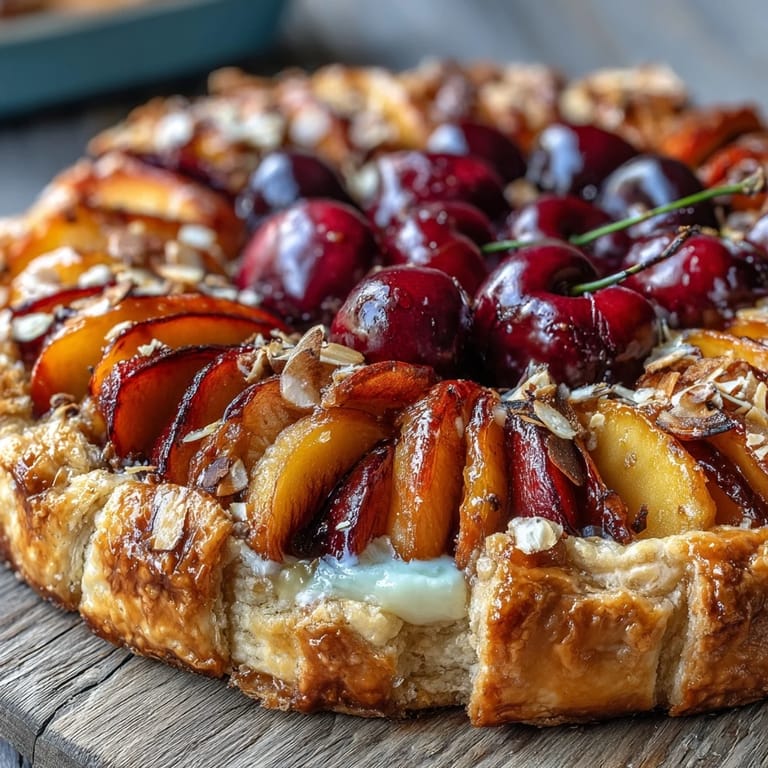
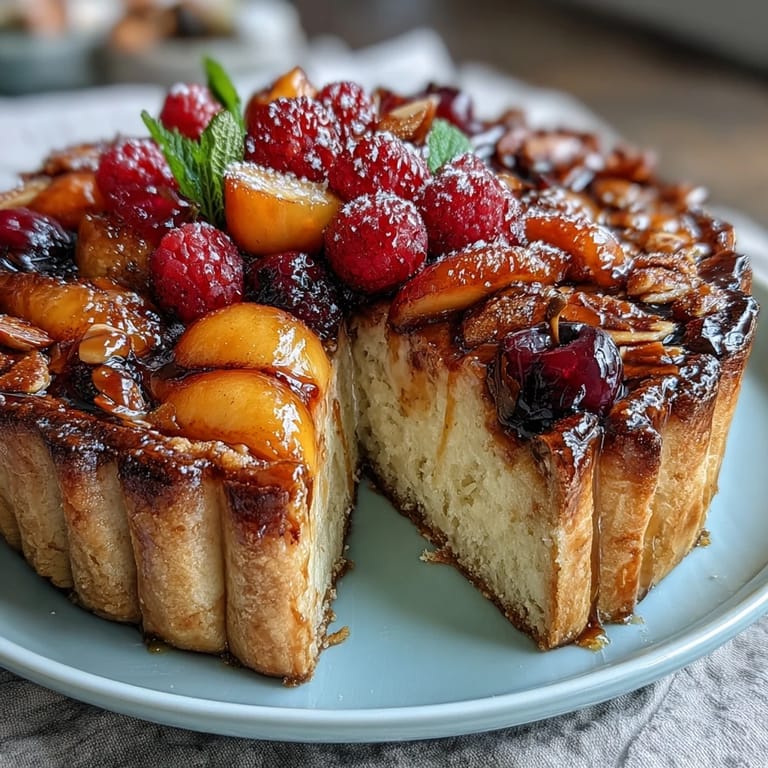
 There's something about July that makes me want to make a galette. I'd wandered through the farmer's market that morning, overwhelmed by the sheer abundance of stone fruits—peaches so fragrant they perfumed my entire bag, plums with that dusty purple bloom, nectarines still warm from the sun. A woman at the stand suggested I make something rustic, something that wouldn't fuss with all that beauty. That's when this galette clicked into place: a canvas of buttery pastry, a layer of almond cream that feels like velvet, and the fruits arranged however I felt like arranging them.
I made this for my sister's birthday potluck last summer, and it arrived at the table still warm, the pastry edges just beginning to shatter when anyone touched it. Someone's kid asked if it was store-bought—not as an insult, but as genuine disbelief that something this golden and professional-looking came from a home kitchen. That moment taught me that galettes are confidence builders; they look like you spent all day on them when really you just folded some edges and let the oven do the work.
Ingredients
- All-purpose flour: The foundation of your pastry; keep it cool and don't overwork it, or you'll end up with something tough instead of flaky.
- Unsalted butter (for pastry): Cold butter is non-negotiable here—it creates those little pockets of steam that make pastry shatter when you bite into it.
- Ice water: This keeps everything cold during mixing, which is the entire secret to a tender crust.
- Almond flour: This creates the frangipane's subtle flavor and tender crumb; buy it fresh if you can, as it goes rancid faster than you'd think.
- Unsalted butter (for frangipane): Softened, not melted—the difference matters when you're creaming it with sugar.
- Egg: This binds everything together in the frangipane and also becomes your egg wash for that gorgeous shine.
- Vanilla and almond extract: The almond extract is optional but leans into the frangipane's identity; vanilla balances everything.
- Mixed stone fruits: Buy them ripe enough to smell like summer but firm enough to slice without falling apart; variety in texture and flavor is part of the charm.
- Cornstarch: Just enough to thicken the fruit juices without making anything gluey or starchy-tasting.
- Lemon juice: A small splash brightens the fruit and cuts through the richness of the almond cream.
- Coarse sugar: For sprinkling, it catches the light and adds a gentle crunch that complements the flaky pastry.
Tired of Takeout? 🥡
Get 10 meals you can make faster than delivery arrives. Seriously.
One email. No spam. Unsubscribe anytime.
Instructions
- Make a pastry you can trust:
- Whisk flour, sugar, and salt together, then work in cold butter until the mixture looks like rough sand with some pea-sized pieces still visible. Add ice water gradually, stirring just until everything comes together—the dough should feel slightly shaggy, not smooth. Flatten it into a disk, wrap it, and let it rest in the fridge for at least thirty minutes; this relaxes the gluten and makes rolling easier.
- Build your almond cream:
- Cream softened butter and sugar until light and fluffy, which takes about two minutes with a mixer and involves a lot of scraping down the bowl. Add the egg, then fold in almond flour, extracts, and salt until you have something smooth and spoonable, like a thick pudding.
- Prepare your fruit without overthinking it:
- Pit and slice your stone fruits, then toss them gently with sugar, cornstarch, and lemon juice in a bowl. The cornstarch will hydrate slightly as it sits; this is fine and actually helps thicken any excess juice that leaks out during baking.
- Roll and arrange with confidence:
- On a lightly floured surface, roll your chilled dough into a twelve-inch circle; if it resists, let it rest for five minutes and try again. Transfer it to parchment paper on your baking sheet, spread the frangipane evenly leaving a two-inch border, then arrange fruit however feels right—scattered, overlapping, radiating from the center, it all works.
- Fold the pastry edges up and over:
- Bring the uncovered border up and over the fruit in loose pleats, letting it drape naturally; you're not making a perfect package, you're making something rustic. Brush with beaten egg and sprinkle with coarse sugar for the final touch.
- Bake until golden and bubbling:
- At 400°F, the pastry will take thirty-five to forty minutes to turn deep golden and the fruit will begin to bubble visibly at the edges. This is when you know it's done; pull it out, let it cool for at least ten minutes, and then it's ready to slice.
 Save to Pinterest
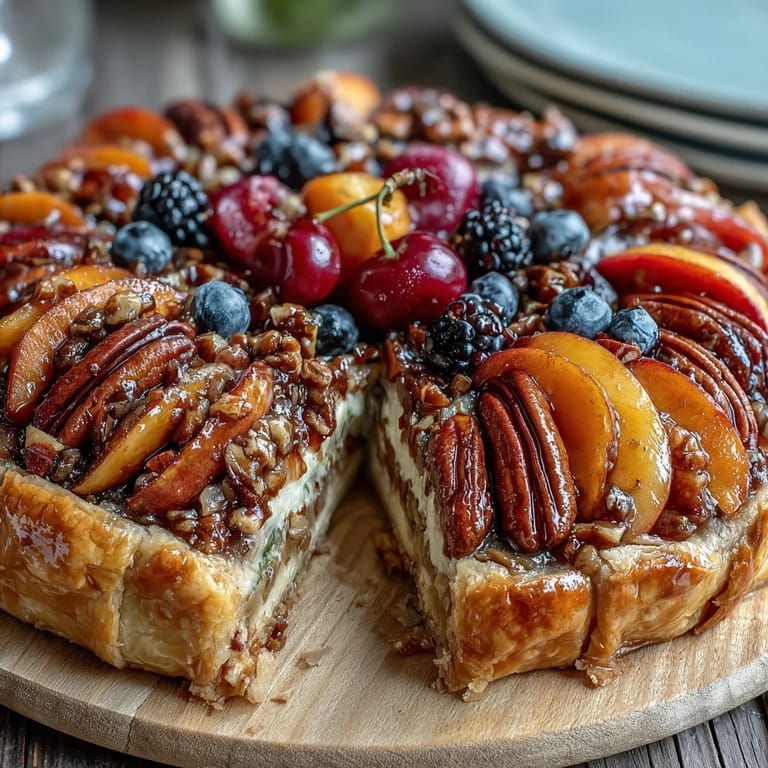
 There's a moment right after you pull a galette from the oven when the kitchen fills with this smell—caramelized stone fruit, toasted almond, buttery pastry—and you realize you've made something worth sharing. My neighbor came over one evening and saw it cooling on my counter; by the time I'd cut a slice and poured coffee, she was already sitting down. That's the thing about galettes: they're casual enough to eat in your kitchen with a friend, fancy enough to plate up for a dinner party, and always delicious.
The Frangipane Advantage
What makes this galette different from a simple fruit tart is the frangipane layer underneath—that almond-butter base that gets slightly caramelized in the oven and soaks up all the fruit juices. It creates a buffer between the wet filling and the pastry, so your bottom crust stays crispy instead of turning into cardboard. The first time I made this, I skipped the frangipane thinking I could just pile fruit directly on pastry, and the result was a soggy disaster that taught me a lesson I've never forgotten.
Choosing Your Stone Fruits
The beauty of a galette is that it welcomes whatever is ripe and available at your market. I've made versions with only peaches, others with a wild mix of everything, and every one has been completely different depending on what I chose. The ratio doesn't matter much—just aim for about four cups of fruit total, sliced or halved depending on size. A ripe nectarine should smell like itself, a plum should yield gently to pressure, and a peach should have some give but not be mushy; that's when you know they're perfect.
Make It Your Own
Once you understand the basic structure—pastry, frangipane, fruit, fold and bake—you can adapt this galette endlessly. A pinch of cinnamon in the fruit layer adds warmth without overpowering anything. Some people brush the pastry with a little honey before sprinkling sugar, which adds a subtle gloss. Others scatter fresh mint leaves over the warm galette just before serving, and it transforms the whole thing into something bright and summery.
- If your dough is too soft to work with, pop it back in the fridge for fifteen minutes and it'll be easier to handle.
- Serving it warm with vanilla ice cream is lovely, but room temperature with a cup of tea is equally perfect.
- Leftovers keep for two days, covered loosely, and actually taste wonderful cold the next morning.
 Save to Pinterest
 A galette is proof that imperfection is often more beautiful than precision, and that the most memorable desserts are the ones made with whatever happens to be in season. Make one this summer when the stone fruits are singing.
Recipe Questions & Answers
- → What types of stone fruits work best?
Peaches, plums, nectarines, apricots, and cherries all work wonderfully, providing a sweet and juicy fruit medley.
- → Can I prepare the pastry and frangipane in advance?
Yes, both dough and almond frangipane can be made ahead and chilled overnight for convenience.
- → What is the purpose of the almond frangipane?
It adds a rich, creamy almond layer under the fruit, enhancing flavor and preventing the crust from becoming soggy.
- → How do I achieve a flaky pastry crust?
Use cold butter cut into flour until coarse crumbs form, then add ice water just until the dough comes together. Chill before rolling.
- → Can I add spices to the fruit filling?
Absolutely, a pinch of cinnamon or other warm spices can deepen the flavors of the stone fruit filling.