 Save to Pinterest
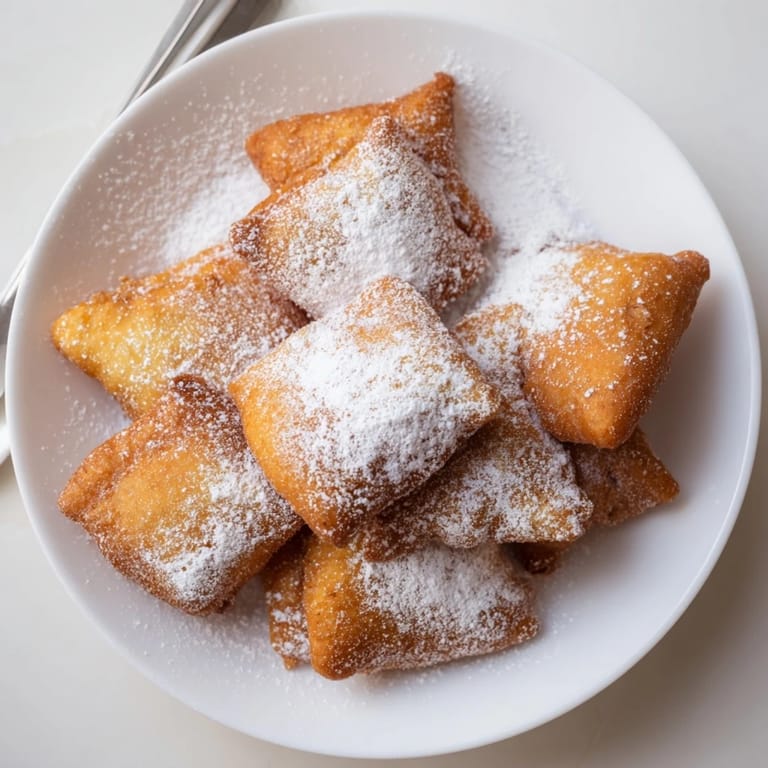
 The first time I bit into a beignet, I wasn't in New Orleans—I was in my aunt's kitchen on a random Tuesday morning, flour dusting the counter like fresh snow. She'd learned to make them from a friend who spent one season waitressing at Café du Monde, and watching her fry those pillows of dough, then watching the powdered sugar cloud rise as she tossed them generously, I understood why people make the trip just for these. Now, whenever I want to recreate that feeling at home, this is the recipe I reach for.
I made these once for a surprise breakfast with my partner, timing it so they'd finish frying right as she walked through the door. She arrived to the apartment smelling like hot oil and sweet dough, and the look on her face when she realized what I'd made was worth every bit of mess. We sat on the couch eating them straight from the plate, sugar all over our hands and laps, talking about nothing important.
Ingredients
- All-purpose flour (3 1/2 cups): The base of everything—don't sift unless you're being fussy, but do measure by spooning and leveling so you don't end up with dense beignets.
- Warm water (1 cup): The temperature matters here; too hot kills the yeast, too cold and it won't wake up, so use a thermometer if you have doubts.
- Whole milk (1/4 cup): Adds richness and helps the dough stay tender even after frying.
- Granulated sugar (1/4 cup): Feeds the yeast and sweetens the dough just enough that it doesn't need anything else.
- Active dry yeast (2 1/4 tsp): One packet, and yes, it matters that it's fresh—check the expiration date before you start.
- Egg (1 large): Binds everything together and gives the beignets that slight richness when they cook.
- Unsalted butter (2 tbsp), melted: Use it warm so it incorporates smoothly into the wet ingredients.
- Salt (1 tsp): Cuts through the sweetness and reminds your palate this is actual food, not just sugar.
- Vegetable oil, for frying: Neutral oil works best; I use whatever I have that won't smoke at 350°F.
- Powdered sugar (1 1/2 cups), for dusting: This is not the time to skimp; generosity is the whole point.
Tired of Takeout? 🥡
Get 10 meals you can make faster than delivery arrives. Seriously.
One email. No spam. Unsubscribe anytime.
Instructions
- Activate the yeast:
- Combine warm water, a pinch of sugar, and yeast in a small bowl, then step away and let it sit for 5 minutes until it's foamy and smells alive. If it doesn't foam, your yeast is dead and you need to start over.
- Build the dough:
- Mix flour, remaining sugar, and salt in a large bowl or stand mixer. Add the foamy yeast mixture, milk, egg, and melted butter, then stir until everything just comes together into a shaggy mass.
- Knead until smooth:
- By hand or with a dough hook, knead for 5 to 7 minutes until the dough becomes smooth and elastic and springs back when you poke it. This is where the gluten develops, so don't rush it.
- First rise:
- Put the dough in a lightly oiled bowl, cover it with plastic wrap or a clean towel, and let it rise in a warm, undisturbed spot for about 1 to 1.5 hours until it's roughly doubled in size. A warm oven with the light on works perfectly.
- Punch and roll:
- When it's risen, punch it down (this is oddly satisfying), then turn it out onto a floured surface and roll it to about 1/4 inch thick. Don't overthink the thickness; just aim for consistent.
- Cut into squares:
- Using a sharp knife or pizza cutter, cut the dough into 2-inch squares. A ruler helps here if you're the type, but freehand is fine too.
- Heat the oil:
- Bring oil to 350°F in a deep fryer or large heavy pot. Use a thermometer and trust it; too cool and they absorb oil, too hot and they burn before puffing.
- Fry in batches:
- Working in small batches so the oil temperature doesn't drop, carefully place beignets in the hot oil and fry for about 1 to 2 minutes per side until they're puffed and golden brown on both sides. Turn them once halfway through.
- Drain and dust:
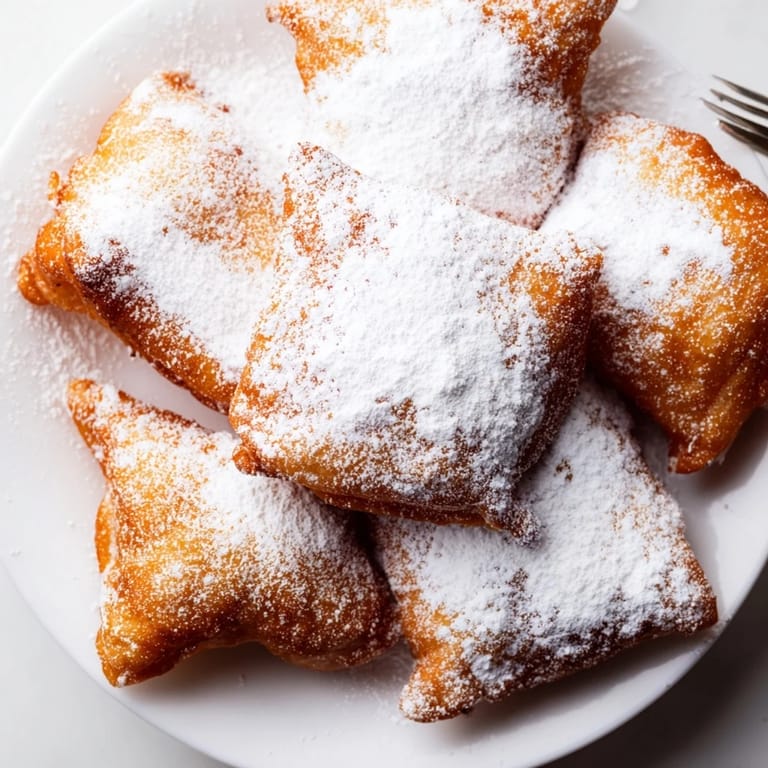
- Remove beignets with a slotted spoon and lay them on paper towels to drain. While they're still warm, dust them generously with powdered sugar—this is when they're most magical.
 Save to Pinterest
 There's a particular kind of happiness that comes from making something that's supposed to be a treat and having it actually turn out right. Beignets are simple enough that failure feels personal, but they're also forgiving enough that even a first attempt tastes like victory.
Getting the Rise Right
The rising step is where most people either rush or get nervous. I've learned to trust the dough more than the clock—if it doesn't look doubled after an hour and a half, give it another 15 minutes rather than force it into the next step. A dough that's properly risen will puff dramatically in the oil, and one that's under-risen will stay dense and won't give you those hollow, pillowy layers you're after.
The Frying Process
Once the oil is hot, the actual frying takes only a few minutes, which is why having everything else ready beforehand matters so much. I set out a plate lined with paper towels, arrange my powdered sugar nearby in a shallow bowl, and have tongs within reach before I drop the first beignet into the oil. The sound changes when they're done—a particular golden sizzle gives way to a quieter fry, and that's when I know to flip or remove them.
Serving and Storing
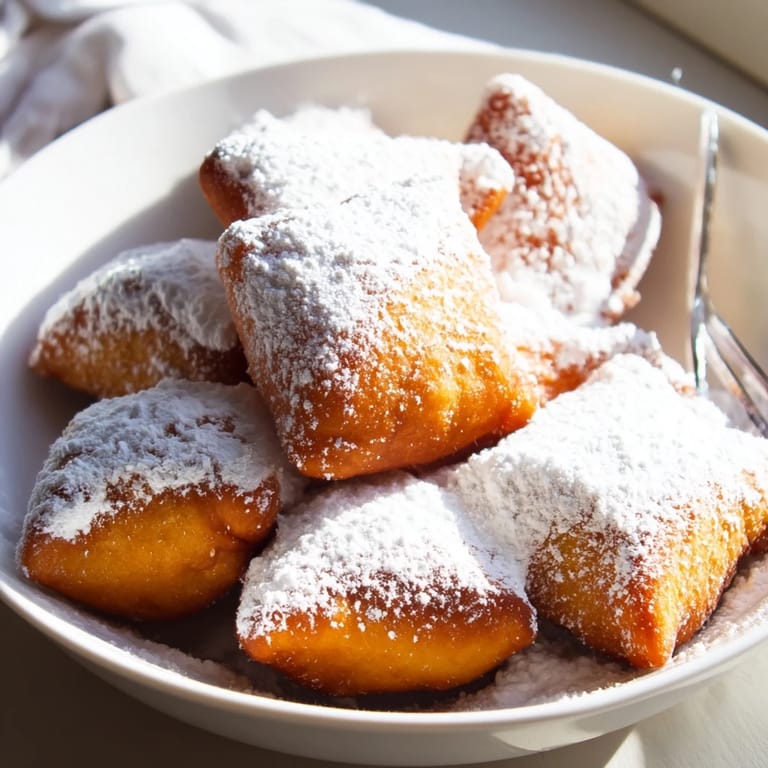
Beignets are genuinely best enjoyed immediately after frying, still warm and still slightly crispy on the outside while the inside stays soft. If you have leftovers, which is rare, store them in an airtight container and reheat gently in a 350°F oven for a few minutes to revive them, though they'll never quite have the same magic as fresh.
- Serve with strong coffee or café au lait if you want the full New Orleans experience.
- Have napkins everywhere—powdered sugar finds its way onto faces and shirts regardless of intentions.
- These freeze beautifully after frying if you need to make them ahead, then just reheat before serving.
 Save to Pinterest
 Making beignets at home is less about recreating a New Orleans bakery and more about giving yourself permission to fry something delicious in the middle of an ordinary morning. Once you understand how the dough works, you'll find yourself making these again and again.
Recipe Questions & Answers
- → What temperature should the oil be for frying?
Heat the oil to 350°F (175°C) to ensure the dough puffs nicely and cooks evenly without absorbing excess oil.
- → Can I add flavors to the dough?
Yes, adding vanilla extract or a pinch of nutmeg can enhance the flavor profile without overpowering the airy texture.
- → How long should the dough rise?
Let the dough rise in a warm place for about 1 to 1.5 hours until it doubles in size, which is key for fluffiness.
- → What is the best way to serve these fried dough squares?
Serve them warm, generously dusted with powdered sugar, often paired with café au lait to capture the true New Orleans experience.
- → How can I reheat the fried dough without losing texture?
Reheat in a 350°F (175°C) oven for a few minutes to maintain crispiness without becoming soggy.