 Save to Pinterest
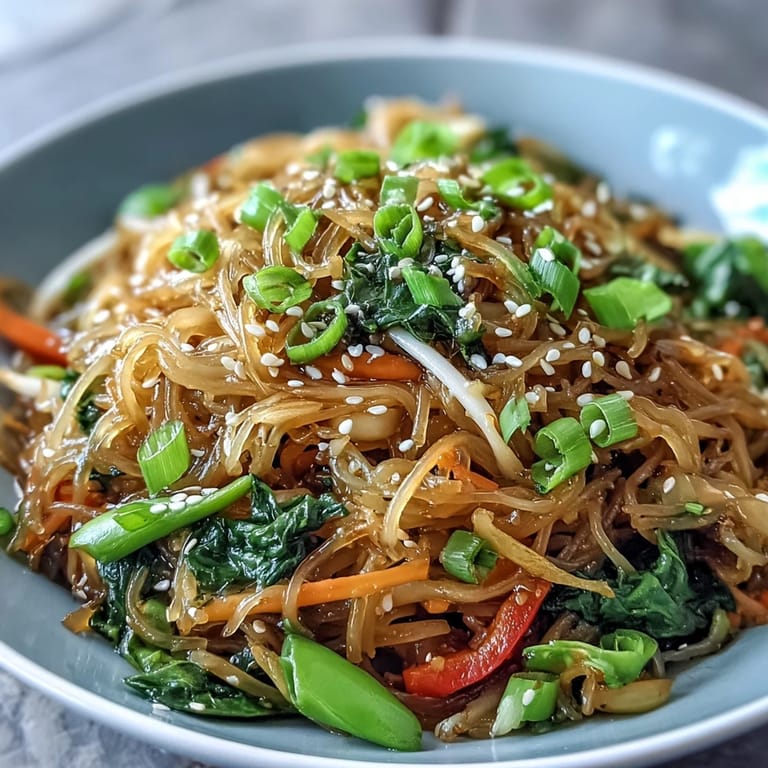
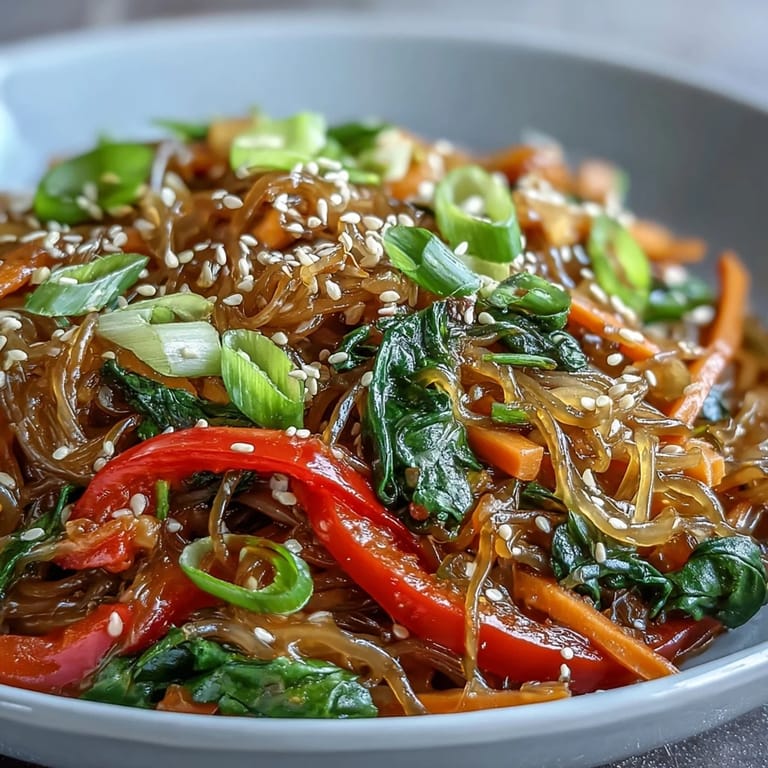
 I discovered kelp noodles by accident at a farmers market on a humid summer afternoon when a vendor's enthusiasm about their translucent, almost magical texture caught me off guard. There's something about their delicate crunch that made me want to build an entire meal around them, and this stir-fry became my answer to those nights when I wanted something bright and satisfying without feeling heavy. The first time I tossed them with ginger-kissed vegetables, the kitchen filled with this clean, aromatic energy that made everyone lean in closer to the pan.
I made this for my mom on a Tuesday when she mentioned being tired of her usual rotation, and watching her eyes light up as she twirled the noodles made me realize how a small shift in ingredients can feel like discovering a whole new cuisine. She asked for the recipe that same evening, which meant I'd accidentally created something she'd want to make for herself.
Ingredients
- Kelp noodles: These ocean vegetables are practically calorie-free and pack minerals most people never think about, plus they hold their snap even after soaking, which is the opposite of traditional noodles.
- Red bell pepper: It brings both sweetness and visual drama, and slicing it thin means it softens just enough in the heat without losing its structural integrity.
- Snap peas: They're the unsung heroes of quick stir-fries, staying bright green and snappy if you don't overcook them.
- Carrot: Julienned into matchsticks so they cook through in the same timeframe as everything else and add natural sweetness that balances the ginger.
- Baby spinach: It wilts down dramatically in seconds, turning silky and mild when it hits the heat.
- Green onions: These finish the dish with an onion bite that keeps it from tasting one-note, plus they add a visual pop.
- Tamari or low-sodium soy sauce: The base of your sauce, and tamari is naturally gluten-free if that matters in your kitchen.
- Toasted sesame oil: This is non-negotiable because the toasting is where all the nutty depth lives, so don't grab the regular kind by mistake.
- Rice vinegar: It adds a gentle acidity without overpowering, cutting through the richness of the oil.
- Fresh ginger: Grated ginger releases oils that make the whole kitchen smell alive and warm, giving the sauce its personality.
- Maple syrup or agave nectar: A whisper of sweetness that rounds out the sharp edges and makes the sauce cohesive.
- Garlic: Minced finely so it distributes evenly and infuses the sauce rather than appearing as chunks.
- Chili flakes: Optional, but they create a subtle warmth that lingers without burning.
- Sesame seeds: Toasted and sprinkled on top for that final textural contrast and nutty finish.
- Cilantro and lime: These are optional but act as bright finishing touches that elevate everything.
Tired of Takeout? 🥡
Get 10 meals you can make faster than delivery arrives. Seriously.
One email. No spam. Unsubscribe anytime.
Instructions
- Soak your kelp noodles gently:
- Place them in a large bowl of warm water for 10 minutes and let them transform from stiff bundles into flexible, pliable strands. Drain them in a colander so they're ready to go when you need them.
- Whisk your sauce into existence:
- In a small bowl, combine tamari, sesame oil, rice vinegar, ginger, maple syrup, garlic, and chili flakes, stirring until everything dissolves and becomes this glossy, amber-colored elixir. Smell it right now—that aroma is a preview of what's coming.
- Get your pan hot and ready:
- Heat a large nonstick skillet or wok over medium-high heat until you can feel the warmth radiating from it. This is where the magic starts.
- Sauté your firm vegetables first:
- Add the bell pepper, snap peas, and carrot, stirring constantly for 3 to 4 minutes until they're tender-crisp with just a whisper of resistance when you bite into them. You want to hear them sizzle.
- Introduce the spinach and green onions:
- Toss them into the pan and watch the spinach collapse into glossy ribbons within about a minute. The green onions will soften slightly and release their subtle sharpness.
- Bring it all together with noodles and sauce:
- Add your drained kelp noodles to the pan along with the sauce, tossing everything with tongs or a spatula for 2 to 3 minutes until the noodles are heated through and coated in that beautiful sauce. Every strand should glisten.
- Finish with intention:
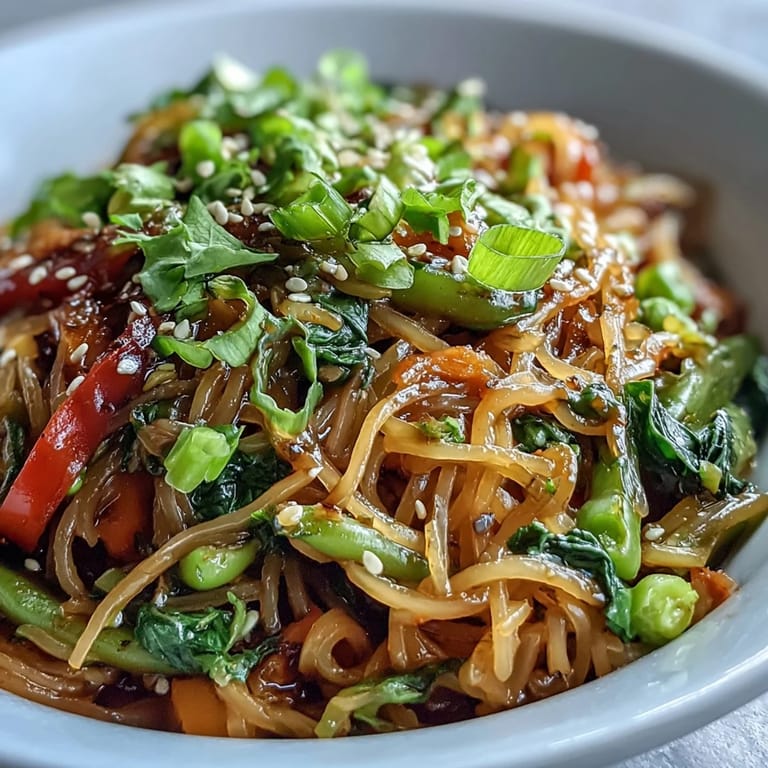
- Transfer to bowls or plates and top with sesame seeds and fresh cilantro if you're using them, squeezing lime juice over just before eating if that's your style.
 Save to Pinterest
 There's a moment in cooking when everything comes together and you can taste why you bothered to chop and stir in the first place, and this dish delivers that moment every single time. It's become my go-to meal when I want to feel nourished without the heaviness, and it's taught me that simple ingredients treated with care become something memorable.
Why Kelp Noodles Are Worth Your Time
Before kelp noodles, I thought all noodle dishes had to be heavy, and I'm grateful I was wrong about that. Their neutral flavor means they become whatever sauce you pair them with, and their texture refuses to turn into the mushy disappointment that regular noodles sometimes become. You're essentially getting the comfort of noodles with the nutritional profile of a vegetable, which feels like winning a lottery nobody expected.
Customizing This to Your Cravings
I've made this stir-fry with almost every vegetable that's shown up in my crisper drawer—broccoli florets, thinly sliced zucchini, mushrooms, even leftover roasted squash—and it adapts beautifully to whatever you have on hand. The sauce is flexible enough to anchor any combination, and I've learned that the vegetables matter less than respecting the cooking time so nothing turns to mush. One evening I added cubed tofu for protein and my partner asked if it was intentional, which means it worked.
Sauce Variations and Playing with Flavor
The ginger sauce is really just a starting point, and once you understand those ratios, you can experiment with what makes your palate happy. I've added a spoonful of almond butter for creaminess, swapped the rice vinegar for lime juice when I had no patience for measuring, and even stirred in a teaspoon of miso paste when I wanted something deeper and more complex. The beauty is that kelp noodles accept these variations without complaining, making this recipe feel like it's yours to interpret.
- If you're craving heat, bump up the chili flakes or stir in a touch of sriracha at the end.
- For nutty richness, a tablespoon of peanut butter or tahini dissolves into the sauce and adds body.
- Tamari can be swapped for coconut aminos if you're avoiding soy, and the sauce still tastes excellent.
 Save to Pinterest
 This meal has become my proof that eating light doesn't mean eating boring, and I hope it becomes that for you too. Every time you make it, you'll probably discover something small that makes it yours.
Recipe Questions & Answers
- → Do kelp noodles need to be cooked?
Kelp noodles don't require traditional cooking. Soaking them in warm water for 10 minutes softens their texture while maintaining their signature crunch. They're ready to eat straight from the package but become more pliable after soaking.
- → Can I add protein to this dish?
Absolutely. Cubed tofu, edamame, or cooked chicken work beautifully. Add tofu when sautéing the vegetables, or stir in pre-cooked proteins during the final heating step with the sauce.
- → How long does this keep in the refrigerator?
Stored in an airtight container, this dish keeps for 3-4 days. The noodles may soften slightly over time but remain tasty. Reheat gently in a skillet or enjoy cold for a refreshing lunch.
- → What vegetables can I substitute?
Broccoli florets, zucchini slices, shiitake mushrooms, or bean sprouts all work well. Aim for colorful, crunchy vegetables that cook quickly and maintain texture in the high-heat stir-fry.
- → Is this dish spicy?
The base dish has mild heat from ginger and garlic. The optional chili flakes add noticeable warmth. Adjust the spice level by adding more chili flakes or a drizzle of sriracha if you enjoy heat.