 Save to Pinterest
 King Cake landed in my kitchen on a Tuesday morning when a friend mentioned she'd never actually made one despite loving them at Mardi Gras parties. I found myself explaining the tradition—that ring-shaped promise of celebration hidden inside—and before I knew it, I was pulling out my mixing bowl to show her how the magic actually happens. There's something about the weight of the dough in your hands and the way the spices hit you as you roll it all up that makes you understand why this dessert has been getting passed around Louisiana for generations. What started as a casual cooking lesson turned into an afternoon of flour-dusted laughter and the kind of kitchen mess that only tastes worth it. Now every time I smell cinnamon and butter toasting together, I'm transported back to that moment.
I brought a King Cake to a dinner party once thinking it would be a nice touch, a little Louisiana flair on a cold February night. The moment I set it down on the table—still warm, those colors gleaming under the kitchen lights—everyone's eyes lit up like kids. We went around the table taking slices with theatrical tension, waiting to see who would find the baby, and when someone's bite suddenly hit plastic, the whole room erupted. It wasn't fancy or Instagram-worthy, but it became the story everyone retold for months afterward.
Ingredients
- Warm milk (3/4 cup): This is your liquid foundation—too hot and you'll kill the yeast before it even starts, too cold and nothing will rise, so hitting that 110°F sweet spot actually matters.
- Active dry yeast (2 1/4 tsp): Buy it fresh and keep it in the fridge if you bake rarely; old yeast won't give you that impressive rise that makes the cake puff up gloriously.
- All-purpose flour (4 cups): The backbone of everything—measure it right (spoon and level, don't scoop) or you'll end up with something too dense.
- Unsalted butter (3/4 cup total): Split between the dough and filling, it's what makes this sing with richness instead of tasting like cardboard.
- Large eggs (2): Room temperature eggs mix in more smoothly and won't shock the warm dough into weird texture.
- Salt (1 tsp): This tiny amount doesn't make it salty—it actually makes the sugar taste sweeter by contrast.
- Ground nutmeg and cinnamon (1 tsp combined in dough): These aren't afterthoughts; they're what separates this from a plain sweet bread and make your whole kitchen smell like celebration.
- Light brown sugar (1/2 cup): For the filling, it has molasses notes that feel more complex than white sugar would be.
- Powdered sugar (1 1/2 cups): The icing needs to be thin enough to drip but thick enough to cling—add the milk gradually and taste as you go.
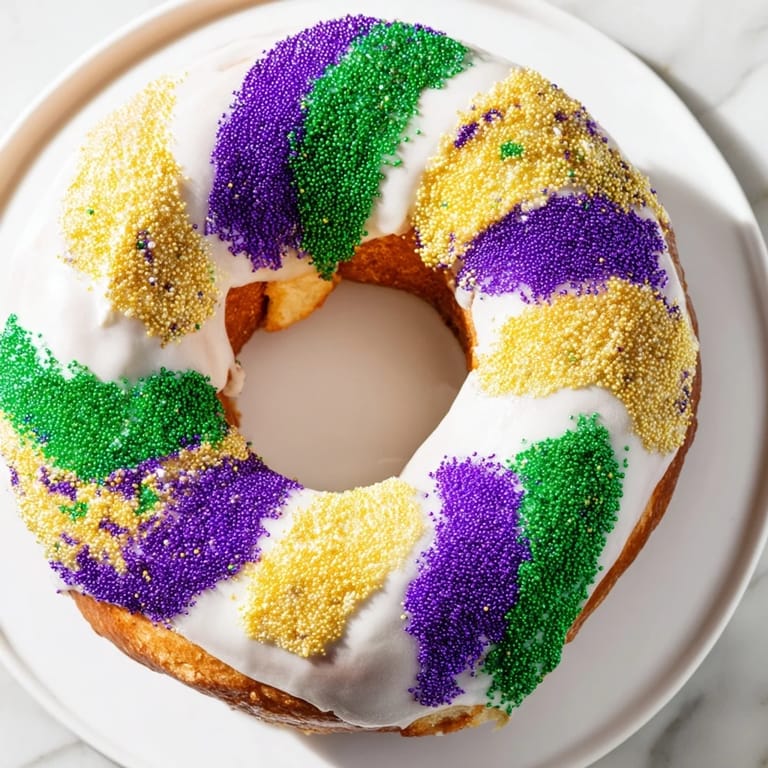
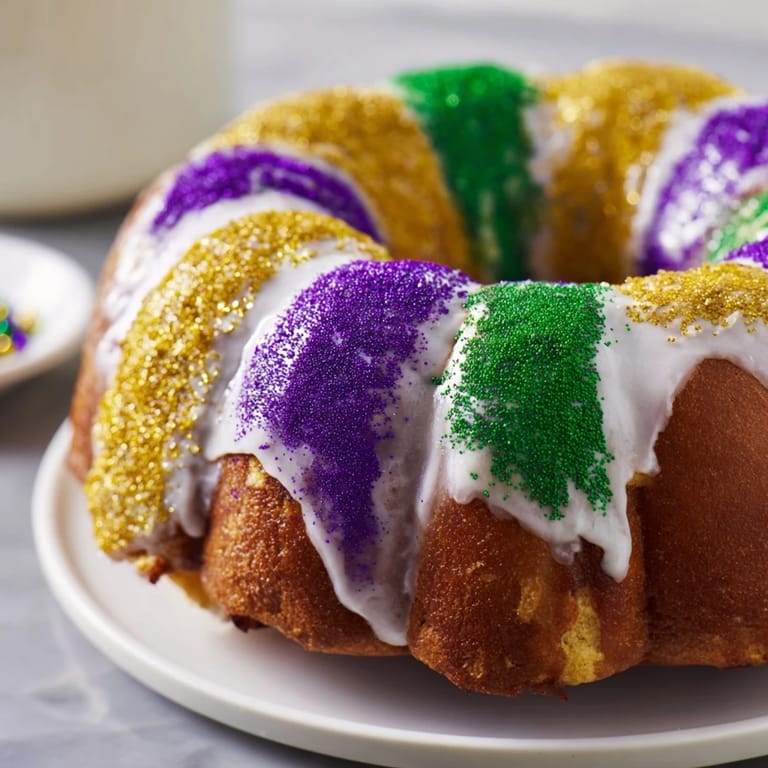
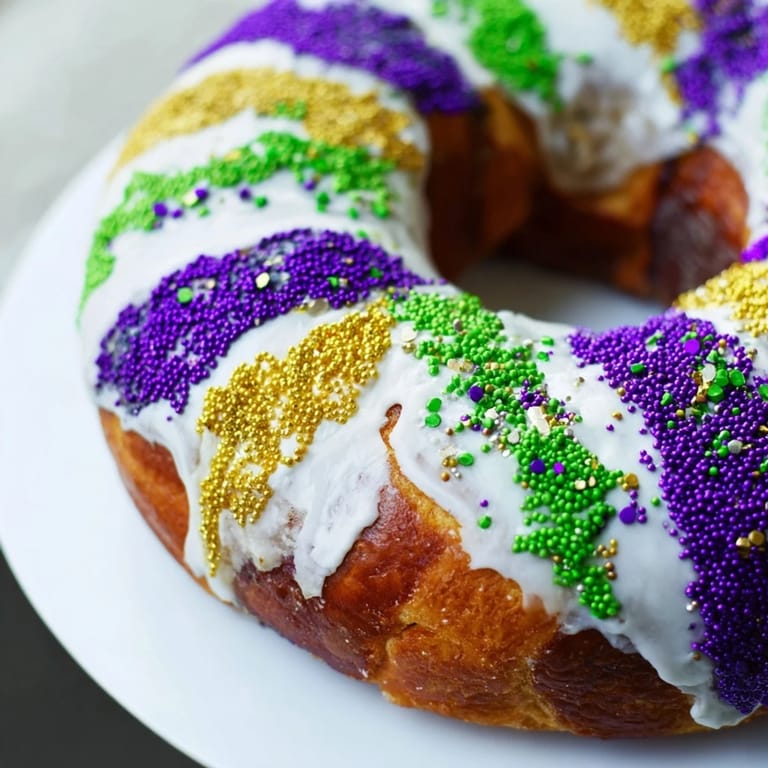
- Colored sugars (purple, green, gold): Apply them while the icing is still wet or they'll just slide off—timing here is everything.
- Plastic baby figurine: This is tradition, not gimmick—it's the reason people lean in with genuine suspense as they eat.
Tired of Takeout? 🥡
Get 10 meals you can make faster than delivery arrives. Seriously.
One email. No spam. Unsubscribe anytime.
Instructions
- Wake up the yeast:
- Dissolve the yeast and 1 tablespoon of sugar in that warm milk and let it sit for 5 to 10 minutes until it gets foamy and alive—if nothing happens, your yeast is dead and you'll want to start over with fresh.
- Build your dough:
- Mix the dry ingredients in a large bowl, then add the butter, eggs, and yeast mixture all at once and stir until shaggy. It'll look like it'll never come together, but keep going.
- Knead and rest:
- Flour your counter and knead for 8 to 10 minutes until the dough becomes smooth, elastic, and slightly bouncy—your hands will know when it's right. Place it in a greased bowl, cover it, and let it rise in a warm spot for 1 to 1.5 hours until it's doubled.
- Create the filling:
- While the dough rises, mix your brown sugar with cinnamon in a small bowl—nothing fancy, just those two ingredients getting to know each other.
- Roll and fill:
- Punch down that risen dough like you mean it, then roll it into a 10 by 20-inch rectangle. Spread softened butter all over it, then sprinkle your cinnamon sugar mixture evenly across the surface.
- Shape into a ring:
- Roll the dough tightly from the long side to create a log, pinch the seam closed, then carefully shape it into a ring and connect the ends. This is where your cake starts to look like something special.
- Second rise:
- Cover and let it rise for 45 to 60 minutes until puffed and pillowy. Preheat your oven to 350°F about halfway through.
- Bake to golden:
- Bake for 25 to 30 minutes until the top is deep golden brown—it'll smell incredible and look almost too pretty to eat. Let it cool completely on a rack before decorating.
- Make your icing:
- Whisk powdered sugar, milk, and vanilla extract until you have something pourable but not watery—the consistency of thick cream is perfect.
- Decorate with drama:
- Drizzle the icing over the cooled cake, then immediately sprinkle the colored sugars in alternating bands of purple, green, and gold while everything is still wet. Once it dries, you've got a showstopper.
- Hide the treasure:
- If using the baby figurine, carefully tuck it into the bottom of the cake just before serving—don't tell anyone, let them discover it with that delightful crunch.
 Save to Pinterest
 What makes King Cake transcend being just a dessert is the anticipation built into it—everyone eats with a little tension, a little hope, wondering if this bite will be the one. I've watched strangers at parties suddenly become friends because of that tiny plastic baby, and I've seen grown adults genuinely excited about hosting the next celebration because they found it. That's not cake magic, that's connection magic.
Why This Cake Became a Tradition
King Cake isn't complicated, but it asks you to slow down—to proof yeast, to wait for rises, to shape something with your hands and let time do half the work. In a world of quick desserts and instant gratification, there's something grounding about that rhythm. The first time I made it, I understood why it had survived centuries of Mardi Gras celebrations; it's the kind of recipe that reminds you why you cook in the first place.
The Optional Upgrade: Cream Cheese Filling
If you want to take this in a richer direction, swap the cinnamon sugar for a cream cheese filling that transforms the whole experience. Mix 8 ounces of cream cheese with 1/4 cup sugar and 1 teaspoon vanilla until smooth, then spread it over the buttered dough before you sprinkle cinnamon sugar on top—it creates this sweet, tangy layer that feels like a revelation when people bite into it. The contrast between the spiced bread and that creamy center is subtle but completely worth the extra step.
Pairing and Serving Moments
This cake is at its absolute best with a cup of strong black coffee on a lazy morning, or with sparkling wine if you're making it the centerpiece of something festive. I've served it both ways and watched people slow down either time, which is the point. The warmth of the cake with the brightness of either drink is a pairing that just works, and the cake stays relevant from breakfast straight through to dessert, depending on your mood and occasion.
- A slice of King Cake and black coffee is breakfast-dessert done right, no apologies needed.
- Cut thicker slices for serving with sparkling wine and make it feel intentional and celebratory.
- It keeps well wrapped at room temperature for two days, so you can make it ahead and just glaze it the morning you're serving.
 Save to Pinterest
 King Cake is about more than sugar and spice and everything nice; it's about the moment when someone bites down and finds that baby, and the whole table erupts. Make it, serve it, and watch what happens.