 Save to Pinterest
 My kitchen counter was dusted with flour like fresh snow, and I was already second-guessing myself. Making ravioli from scratch felt ambitious for a Tuesday night, but my neighbor had dropped off a bag of spinach from her garden, and I couldn't let it wilt in the crisper. The dough came together easier than I expected, warm and silky under my palms. By the time I sealed the first ravioli, I understood why people fall in love with pasta making.
I made these for my sister's birthday dinner last spring, and she stood in the doorway watching me fold each one. She said it reminded her of our grandmother, even though Nonna never made ravioli. Sometimes food just carries that kind of weight. We ate them with too much Parmesan and a bottle of wine that was probably too nice for a Wednesday, and nobody cared.
Ingredients
- All-purpose flour: The foundation of your dough, and using regular flour keeps it tender without being too chewy or tough.
- Eggs: They give the pasta its rich color and structure, so use the freshest ones you can find for the best flavor.
- Ricotta cheese: Look for whole milk ricotta, it has a creaminess that part-skim just can't match, and it holds the filling together beautifully.
- Fresh spinach: Squeeze it dry after cooking or your filling will be watery, I learned this the hard way on my first attempt.
- Parmesan cheese: Freshly grated is key here, the pre-shredded stuff has anti-caking agents that make the filling gritty.
- Egg yolk: This binds the filling and adds richness without making it runny.
- Nutmeg: Just a pinch transforms the filling from bland to magical, it's the secret ingredient nobody expects.
- Marinara sauce: Homemade is lovely, but a good jarred sauce works perfectly when you're already making pasta from scratch.
- Garlic: Fresh cloves sautéed in olive oil make the whole kitchen smell like an Italian grandmother lives there.
- Fresh basil: Torn at the last second, it adds a bright herbal note that cuts through the richness.
Tired of Takeout? 🥡
Get 10 meals you can make faster than delivery arrives. Seriously.
One email. No spam. Unsubscribe anytime.
Instructions
- Make the Pasta Dough:
- Mound your flour on a clean counter and create a well in the center like a little volcano. Crack the eggs into the well, add salt, and use a fork to slowly pull flour into the eggs until it starts to come together. Knead it for 8 to 10 minutes until it feels smooth and elastic, then wrap it tightly in plastic and let it rest for 30 minutes so the gluten can relax.
- Prepare the Filling:
- Steam or sauté your spinach until it wilts down, then let it cool before squeezing out every bit of moisture you can. Mix it with ricotta, Parmesan, egg yolk, nutmeg, salt, and pepper until everything is evenly combined and tastes well-seasoned.
- Roll the Pasta:
- Cut your rested dough in half and work with one piece at a time, keeping the other covered. Roll it out as thin as you can, about 1/16 inch, using a pasta machine or a rolling pin and a lot of patience.
- Shape the Ravioli:
- Lay out one sheet of pasta and drop teaspoons of filling in rows, leaving about 2 inches between each mound. Brush the edges and spaces with water, drape the second sheet over the top, and press firmly around each filling pocket to seal. Cut them into squares with a knife or ravioli cutter, then press the edges with a fork to make sure they won't burst open when they cook.
- Cook the Ravioli:
- Bring a large pot of salted water to a gentle boil, not a rolling one or they might break apart. Drop the ravioli in batches and cook for 3 to 4 minutes until they float to the surface, then lift them out gently with a slotted spoon.
- Make the Marinara Sauce:
- Heat olive oil in a saucepan over medium heat and sauté minced garlic until it smells incredible, about a minute. Add your marinara sauce, season with salt and pepper, and let it simmer for 5 minutes to deepen the flavors.
- Serve:
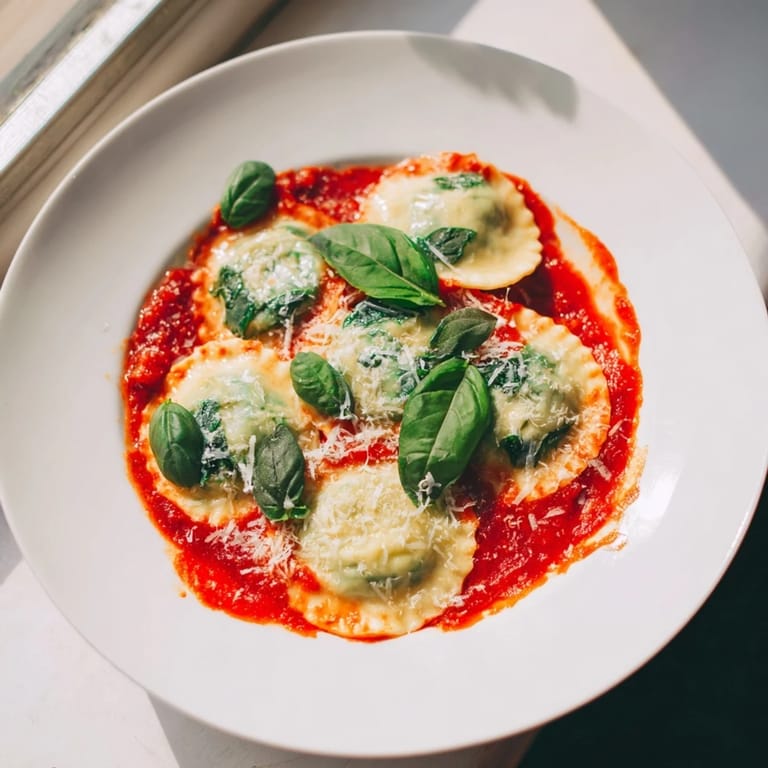
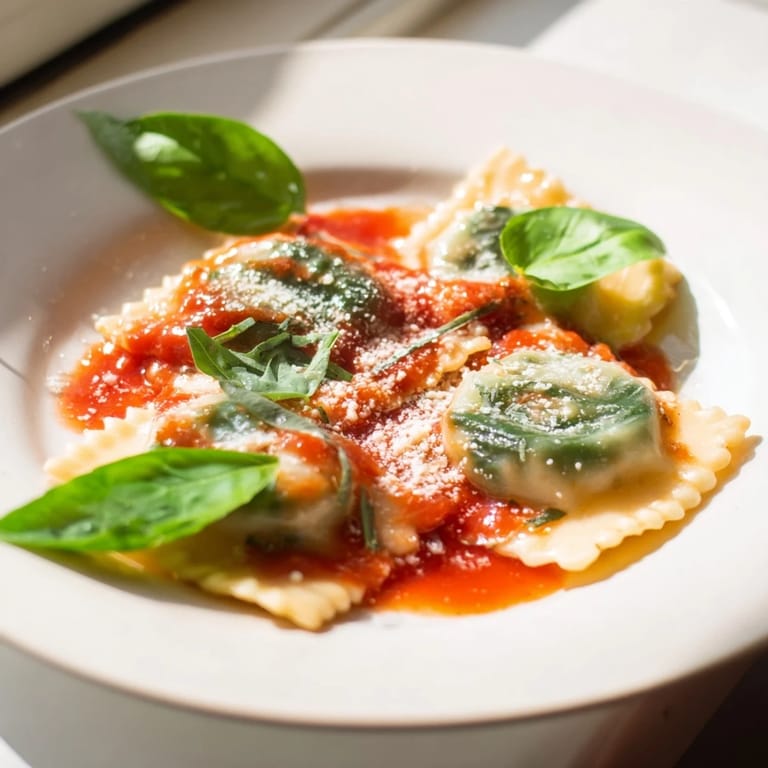
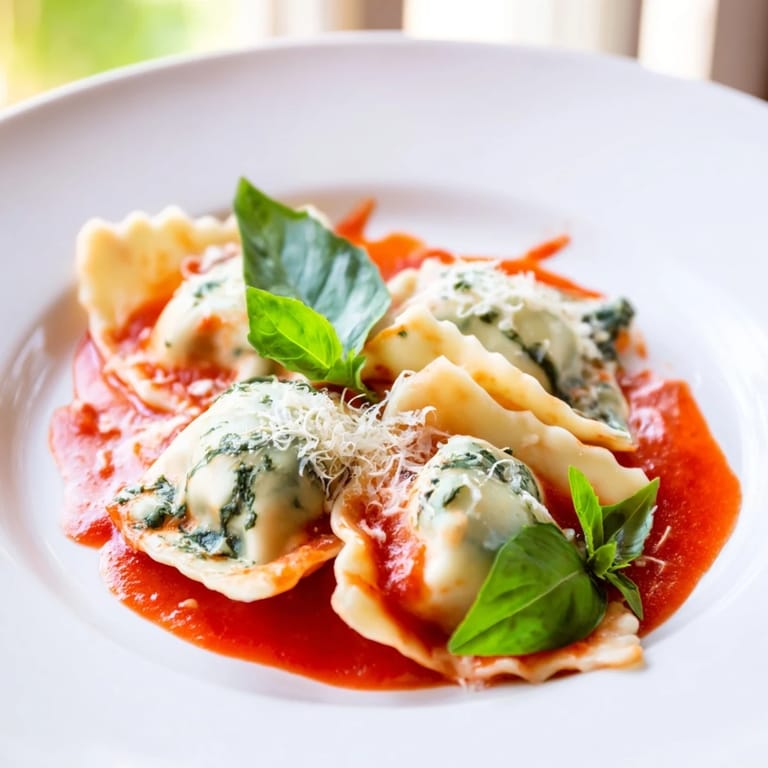
- Spoon a little sauce onto each plate, arrange the hot ravioli on top, and add more sauce. Finish with torn basil leaves and a generous shower of Parmesan.
 Save to Pinterest
 The first time I served these, my friend who claims she doesn't like ricotta had three helpings. She said it tasted nothing like lasagna ricotta, and I realized it's because the spinach and nutmeg completely change the flavor. That night, ravioli stopped being intimidating and became something I actually looked forward to making. It's one of those recipes that turns cooking into an event, not a chore.
Making It Your Own
You can swap the spinach for kale or chard if that's what you have, just make sure to chop it finely and dry it well. I've also added a pinch of lemon zest to the filling on a whim, and it brought a brightness that made everyone ask what was different. If you want to go richer, brown butter with sage is a classic sauce that lets the pasta shine even more than marinara does.
Storage and Freezing
Once you've shaped the ravioli, you can freeze them on a baking sheet until solid, then transfer them to a freezer bag where they'll keep for up to three months. Cook them straight from frozen, just add an extra minute or two to the boiling time. Cooked ravioli don't reheat as well, so I always freeze them uncooked and boil only what I need.
Serving Suggestions
These ravioli shine with simple sides that don't compete for attention. A crisp green salad with lemon vinaigrette and a chunk of crusty bread for soaking up extra sauce is all you really need. We've served them with roasted asparagus in the spring and a light arugula salad in the summer, and both felt perfect.
- Pair with a chilled Pinot Grigio or a light Chianti for a classic Italian experience.
- Add a drizzle of good olive oil and red pepper flakes if you like a little heat on your plate.
- Leftover filling makes a great stuffing for mushrooms or bell peppers if you have extra.
 Save to Pinterest
 There's something deeply satisfying about pulling a plate of homemade ravioli from your own kitchen, knowing you made every part of it. It's the kind of meal that makes people linger at the table, and that's worth every bit of flour on the floor.
Recipe Questions & Answers
- → Can I make the ravioli ahead of time?
Yes, assembled ravioli can be frozen on a baking sheet for 2 hours, then transferred to freezer bags for up to 3 months. Cook directly from frozen, adding 1-2 minutes to cooking time.
- → What's the best way to seal ravioli edges?
Brush pasta edges with water before pressing the second sheet on top. Use your fingers or a fork to press firmly around each filling mound, ensuring no air pockets remain. A ravioli cutter creates uniform shapes and seals simultaneously.
- → How do I know when ravioli is cooked?
Fresh ravioli floats to the surface when cooked through, typically after 3-4 minutes. Frozen ravioli takes slightly longer. Test one to ensure the pasta is tender and filling is heated through.
- → Can I use frozen spinach instead of fresh?
Absolutely. Thaw frozen spinach completely and squeeze out all excess moisture before chopping and mixing with ricotta. This prevents a soggy filling and watery ravioli.
- → What wine pairs well with this dish?
A crisp white wine like Pinot Grigio complements the rich ricotta filling and bright marinara sauce perfectly. The acidity cuts through the cheese's richness and enhances the spinach's earthiness.
- → How can I prevent ravioli from splitting during cooking?
Ensure filling is not overstuffed, edges are properly sealed with no trapped air, and water is at a gentle boil rather than rolling. Avoid crowding the pot and use a slotted spoon for careful removal.