 Save to Pinterest
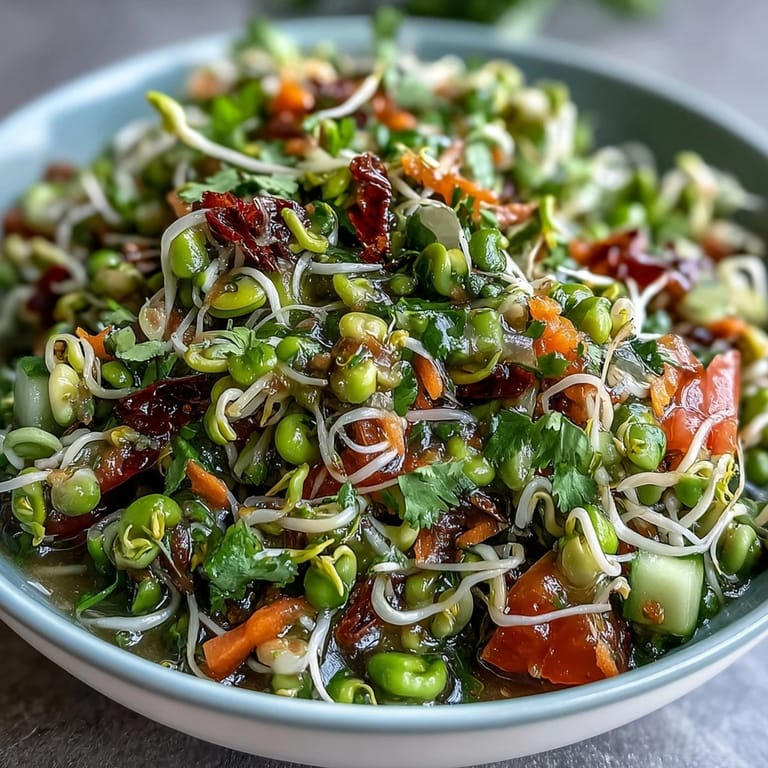
 My neighbor showed up one Tuesday with a mason jar of sprouted seeds she'd been growing on her windowsill, insisting I do something with them before they got boring. That afternoon, I tossed them together with whatever crisp vegetables I had lying around, drizzled them with a simple lemon dressing, and suddenly understood why she'd been so excited about those tiny green shoots. It's one of those salads that tastes far more alive than it has any right to, bursting with texture and a brightness that makes you feel genuinely good while eating it.
I made this for a potluck last spring where everyone else brought casseroles and baked goods, and I nearly brought it back empty. A friend I hadn't seen in months asked for the recipe mid-conversation, napkin in hand, and I realized how rare it is to watch people genuinely light up over salad. That moment stuck with me because it wasn't about impressing anyone—it was just honest food that made people feel better.
Ingredients
- Mung bean sprouts: These are the mild-mannered base that lets other flavors shine while adding a delicate, fresh crunch that doesn't overpower.
- Alfalfa sprouts: Slightly more peppery than mung beans, they bring a subtle bite that wakes up your palate.
- Radish sprouts: Here's where things get interesting—they pack real peppery heat and a spicy finish that makes the whole salad more complex than it appears.
- Cucumber: Keeps things cool and hydrating, the quiet teammate that balances the peppery notes from the sprouts.
- Tomato: Choose something ripe and juicy, not those mealy supermarket ones, because it actually matters here.
- Red bell pepper: Adds sweetness and color without being aggressive about it.
- Carrot: A little raw carrot goes a long way for earthiness and natural sweetness.
- Red onion: A small amount brings sharpness and a hint of color, but use restraint or it'll take over the whole bowl.
- Fresh cilantro: If you love it, it brightens everything; if you're one of those people to whom it tastes like soap, honest to goodness, skip it and add basil instead.
- Extra-virgin olive oil: Don't use the cheap stuff here—this is where your oil actually tastes like something.
- Lemon juice: Freshly squeezed makes an enormous difference, not the bottled kind that tastes faintly of plastic.
- Sea salt and black pepper: These humble seasonings actually bring the whole thing into focus.
Tired of Takeout? 🥡
Get 10 meals you can make faster than delivery arrives. Seriously.
One email. No spam. Unsubscribe anytime.
Instructions
- Give Your Sprouts a Good Rinse:
- Hold them under cold running water and let the water run clear—you're removing any dust or debris that might've hitched a ride during sprouting. Pat them gently dry with paper towels so they don't water down your dressing.
- Build Your Base:
- Throw all three sprouts into your largest bowl and get them settled in comfortably. This is where the personality of the salad starts to emerge.
- Add Your Vegetables:
- Dice everything evenly so no bite is a surprise of huge tomato chunks or thin carrot wisps. Toss everything together gently, letting the colors tumble around each other.
- Make Your Dressing:
- Whisk the olive oil and lemon juice together until they start to look creamy and emulsified, which only takes about thirty seconds of actual effort. Add salt, pepper, and sweetener if you're using it, tasting as you go because you might want a touch more lemon or a pinch more salt.
- Bring It All Together:
- Pour that dressing over everything and toss with the kind of care you'd use with a Jenga tower—gentle but thorough. Serve immediately so you catch that perfect moment when everything is still crisp and the flavors haven't started muddling together.
 Save to Pinterest
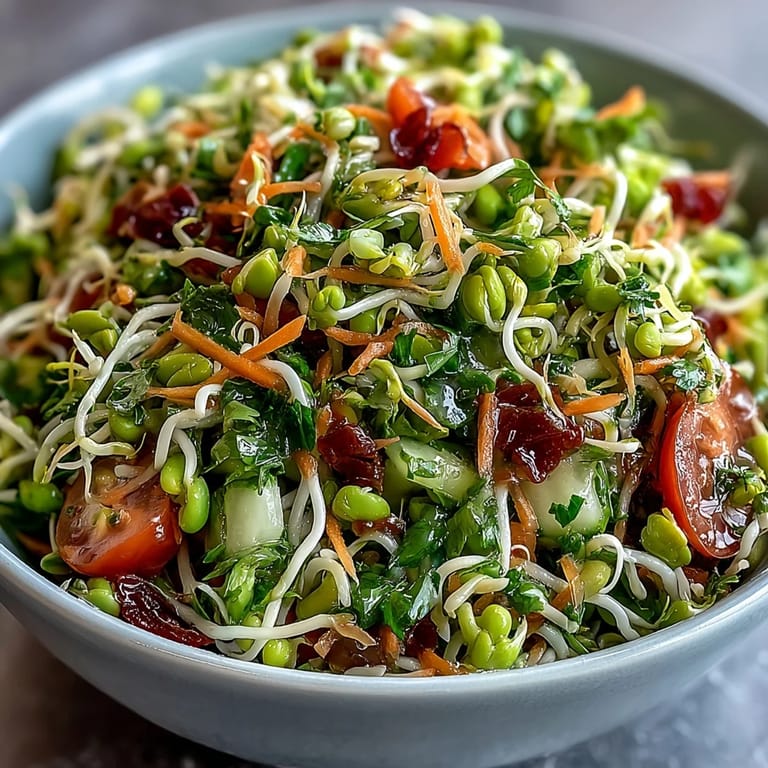
 There's something almost meditative about assembling this salad, watching the pale sprouts nestle against the reds and oranges of the vegetables, knowing that within minutes it'll be gone and you'll feel genuinely nourished instead of just full. My kitchen smells like fresh lemon and green growing things on the days I make this, and that alone is worth the minimal effort.
The Sprouting Story
I used to think sprouting seeds at home was some kind of complicated science project that only health food nerds could pull off, but it's honestly just seeds, water, and patience. Once you realize you can grow your own sprouts in a jar on a windowsill, buying those plastic containers from the store feels unnecessary—plus you get them fresher, cheaper, and with way less packaging guilt.
Why Sprouts Matter More Than You Think
Sprouting is basically seeds waking up and becoming more of themselves—more enzymes, more nutrients, more digestible protein. It's the kind of thing that sounds hippie-dippy until you actually taste the difference between a salad made with sprouts and one made with regular greens, and then you get it.
Make It Your Own
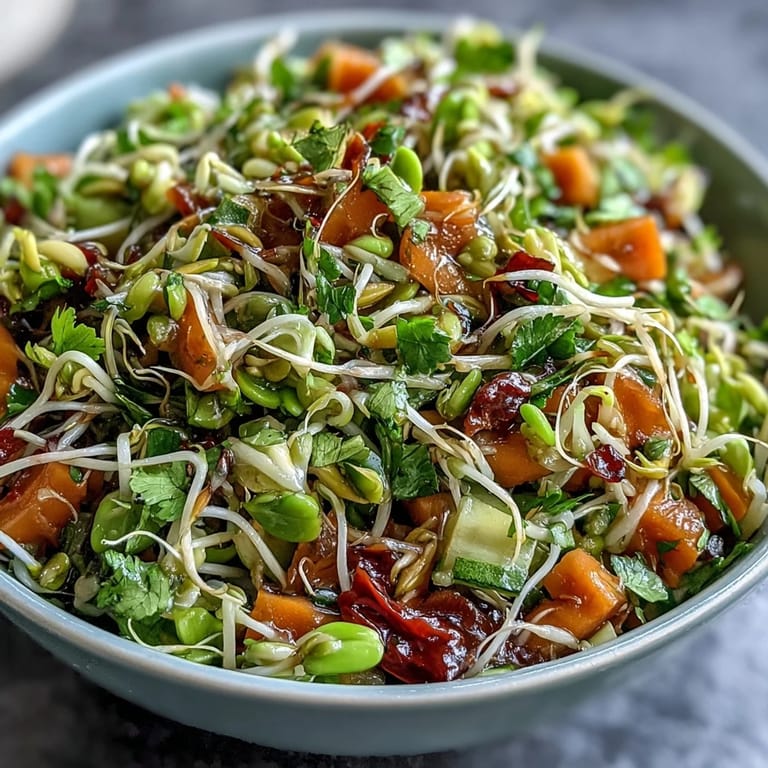
This salad is actually a wonderful foundation that handles variations beautifully, whether you're working with what's in your fridge or trying to use up vegetables before they turn sad. I've made it with shredded kohlrabi instead of carrot, swapped the cilantro for mint, and once added sliced avocado because I was feeling fancy and it was exactly right.
- Roasted pumpkin seeds or sunflower seeds on top add crunch and turn this into more of a meal.
- A dollop of tahini thinned with lemon juice creates a richer, earthier dressing if you're in the mood for something deeper.
- Serve it in lettuce cups or alongside grilled chicken if you need to make it feel like more of a main course.
 Save to Pinterest
 Make this when you want to feel like you've actually taken care of yourself, because that's what this salad delivers. It's bright, quick, honest food that tastes like you put thought into it.
Recipe Questions & Answers
- → How long do sprouted seed vegetables stay fresh?
For optimal texture and flavor, enjoy immediately after tossing with dressing. The undressed components stay fresh in the refrigerator for up to two days when stored in an airtight container.
- → Can I use different sprout varieties?
Absolutely. Broccoli, clover, or lentil sprouts work beautifully. The key is using approximately three cups total sprouts to maintain the proper vegetable-to-greens ratio.
- → What makes the dressing emulsify properly?
Whisking vigorously while slowly drizzling the olive oil into the lemon juice creates the emulsion. The optional honey or maple syrup helps stabilize the mixture while adding subtle sweetness.
- → Is this suitable for meal prep?
Store components separately: keep washed and drained sprouts and chopped vegetables in one container, dressing in another. Combine just before serving to preserve the crisp texture.
- → What protein additions complement this dish?
Chickpeas, quinoa, or hemp seeds boost protein content while maintaining the fresh profile. For non-vegan options, grilled chicken or poached salmon pair wonderfully with the citrus notes.