 Save to Pinterest
 The first time I pulled a warm monkey bread out of the oven, I hadn't expected the rush of nostalgia—that buttery cinnamon aroma instantly transported me to my grandmother's kitchen on Sunday mornings. She never called it by that funny name; to her, it was just "the pull-apart bread," and the whole family would gather around while it was still steaming, unable to wait for it to cool. I've since made it hundreds of times, and each time I'm struck by how something so simple—just dough balls, butter, and cinnamon—becomes something magical when you layer them in a bundt pan. The magic isn't in technique; it's in the ritual of pulling those tender, sticky pieces apart with your bare hands, the way the caramelized sugar catches the light. That's monkey bread.
I learned the true power of this bread at a chaotic family brunch where three things went wrong before 9 a.m.—the coffee maker broke, my sister showed up with her unexpectedly difficult boyfriend, and I'd forgotten to make dessert. Out of pure survival instinct, I mixed up this dough while still in my pajamas. By the time it came out of the oven, the whole apartment smelled so good that even difficult-boyfriend's face softened. He asked for the recipe. That's when I knew this bread was more than breakfast; it was a small miracle in edible form.
Ingredients
- All-purpose flour (500g): The foundation—use a reliable brand and spoon-and-level rather than scooping straight from the bag, or you'll end up with dense, sad balls.
- Instant dry yeast (7g): This is the workhorse; make sure it's fresh and stored in a cool place, or your dough won't rise no matter how long you wait.
- Granulated sugar (60g for dough, 200g for coating): The coating sugar is what caramelizes and becomes sticky-golden heaven, so don't skip it or reduce it.
- Salt (1 tsp): Tiny but essential—it wakes up the flavor and keeps the yeast from running wild.
- Warm milk (180ml): Temperature matters here; too hot kills the yeast, too cold and nothing happens, so aim for the warmth of bathwater.
- Unsalted butter (60g for dough, 115g for coating): Melted butter incorporates smoothly into dough and gives the coating that silky, luxurious coating.
- Large eggs (2): They add richness and help bind everything together into soft, tender crumbs.
- Ground cinnamon (2 tsp): This is your flavor anchor—don't use more than 2 tsp or it becomes harsh, and never use the dusty stuff from the back of the spice cabinet.
- Powdered sugar (120g for glaze, optional): A drizzle of glaze adds sweetness and visual polish, but honestly, the bread is perfect without it.
- Vanilla extract (½ tsp for glaze): If you're making the glaze, vanilla lifts it from plain to memorable.
Tired of Takeout? 🥡
Get 10 meals you can make faster than delivery arrives. Seriously.
One email. No spam. Unsubscribe anytime.
Instructions
- Combine Your Dry Ingredients:
- In a large bowl, whisk together flour, yeast, sugar, and salt—this ensures the yeast distributes evenly instead of clumping. You'll see little flecks of yeast throughout, which is exactly what you want.
- Bring the Dough Together:
- Add warm milk, melted butter, and eggs to the dry mix, stirring until a shaggy dough forms. It will look rough and slightly sticky, like it hasn't figured out what it wants to be yet.
- Knead Until Silky:
- Using a stand mixer with a dough hook or your hands (I prefer my hands—you feel when it's ready), knead for 5 to 7 minutes until the dough becomes smooth and elastic, with just a slight stick to it. If it's still sticking to the bowl after 7 minutes, dust in a tablespoon more flour and keep going.
- Let It Rise:
- Place the dough in a lightly oiled bowl, cover loosely with plastic wrap or a damp towel, and tuck it somewhere warm—the top of the fridge, an oven with the light on, or near (not on) a radiator. You're aiming for doubled in size, which usually takes about 1 hour, though it might take longer on cold days.
- Mix Your Coating:
- While the dough rises, combine granulated sugar and cinnamon in one bowl and place melted butter in another. Have them ready to go because you'll move quickly once the dough is ready.
- Shape the Balls:
- Punch down the risen dough (this is satisfying), then cut it into roughly 40 small pieces—each should be about the size of a walnut in its shell. Roll each between your palms into a smooth ball; they don't need to be perfect, just roughly spherical.
- Coat and Layer:
- Dip each ball into melted butter, then roll it in cinnamon sugar until fully coated. Layer them randomly in a well-greased bundt pan—don't worry about neat rows; messy is actually better because it creates little cinnamon pockets.
- Second Rise:
- Cover the pan loosely and let the dough rise for 20 to 30 minutes until the balls look slightly puffed and have snuggled together; they shouldn't quite double again, just become visibly fuller.
- Bake Until Golden:
- Preheat your oven to 180°C (350°F) and bake for 30 to 35 minutes until the top is deeply golden and the edges show darker browning. The bread is done when a toothpick inserted into the center comes out clean or with just a few moist crumbs.
- Cool and Release:
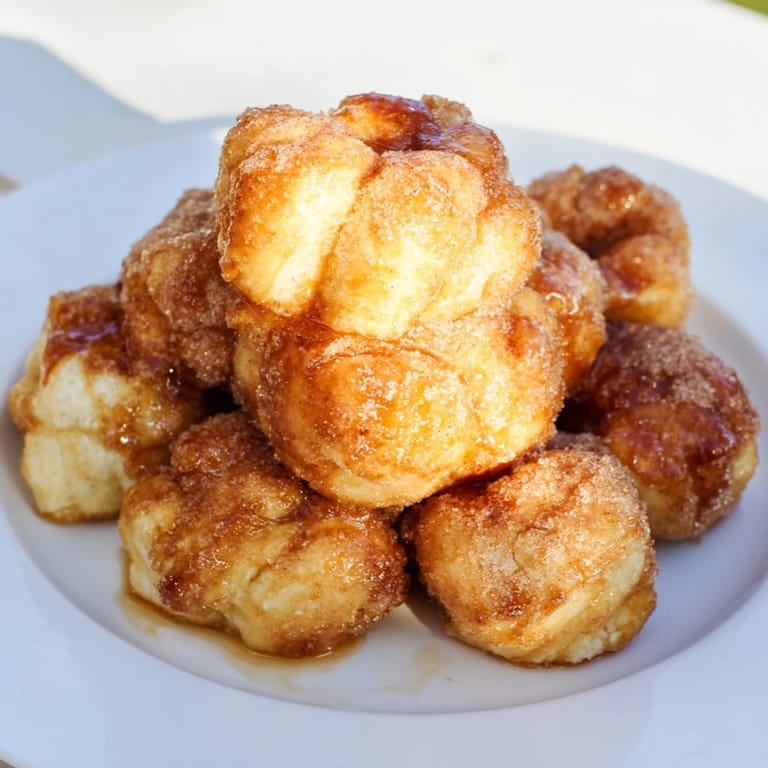
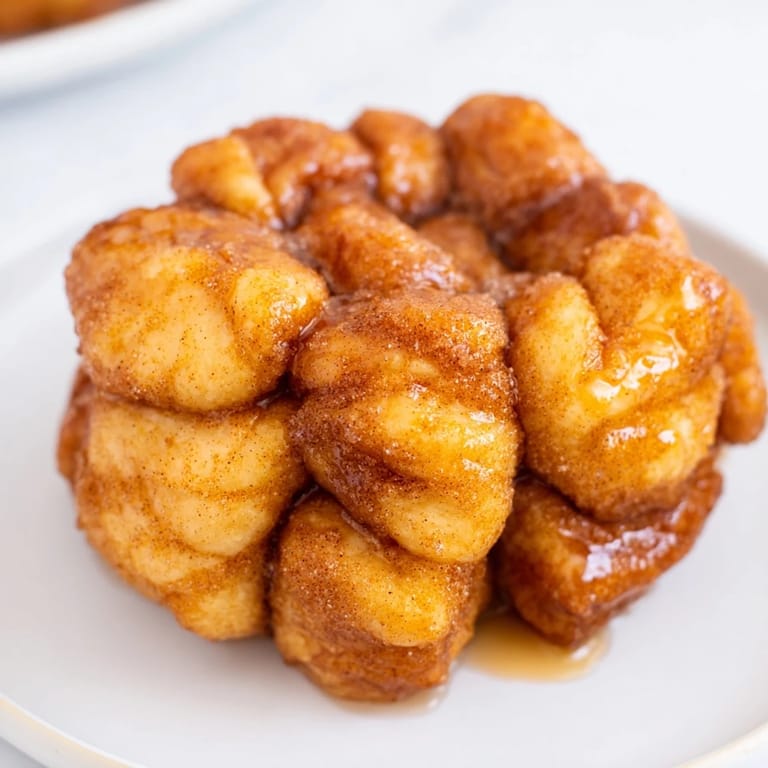
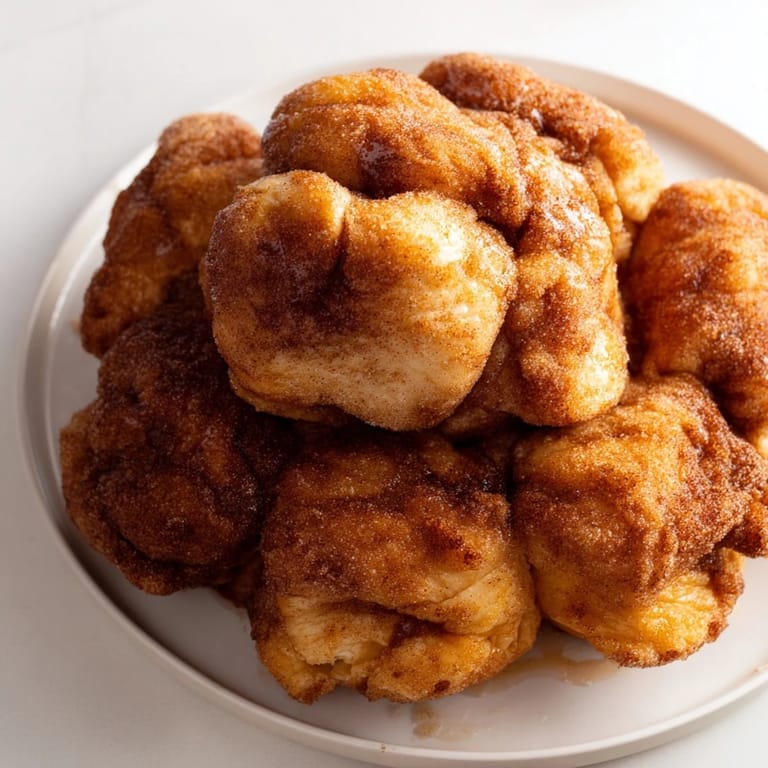
- Let the bread sit in the pan for 10 minutes—this is crucial because it firms up just enough to hold together when you flip it. Then invert it onto a serving plate, and watch as all those sticky, caramelized bits cling to the outside like edible jewelry.
- Glaze (Optional):
- Whisk together powdered sugar, milk, and vanilla until you have a pourable consistency, then drizzle it over the warm bread. The warmth helps the glaze set into a sweet shell.
 Save to Pinterest
 I once made monkey bread for a coworker who'd just moved to a new city and was feeling homesick, and watching her face light up as she pulled that first sticky piece apart reminded me that food carries memory and comfort in ways words never can. In that moment, it wasn't just bread; it was an invitation to belong.
Why This Bread Works for Any Occasion
Monkey bread exists in that rare sweet spot where it's humble enough for a lazy Sunday but impressive enough to serve at a dinner party. It's breakfast, dessert, and conversation starter all in one form. I've brought it to potlucks, bake sales, and morning meetings, and every single time someone asks for the recipe or admits they've never seen anything like it. The key is that it feels homemade and personal—there's no pretense, no fancy technique—just butter, sugar, and the willingness to get your hands messy, which somehow makes everyone feel welcome.
The Science of Sticky-Sweet Perfection
The magic happens in the layering: as the bread bakes, butter and cinnamon sugar melt into rivers that pool at the bottom of the pan, then caramelize into a thick, glossy sauce that coats every piece. The dough balls themselves stay tender because they're stacked close enough to steam each other gently, and that steam is what keeps them soft enough to tear apart with your fingers rather than a knife. Understanding this—that you're essentially steaming and caramelizing simultaneously—helps you appreciate why every step matters, from the second rise to the exact oven temperature.
Make-Ahead Magic and Timing
One of my favorite discoveries is that you can mix and refrigerate the dough up to 12 hours ahead, then let it come to room temperature and proceed as usual—or even mix everything, let it rise once, shape all the balls, coat them, and refrigerate the assembled bundt pan overnight, then bake fresh in the morning. This flexibility means you can have warm monkey bread on the table without waking up at dawn. The only trick is to let the cold pan sit on the counter for 15 minutes before baking, so the dough can start waking up.
- Cold dough rises more slowly, so add 10 to 15 minutes to the second rise time if baking straight from the fridge.
- You can freeze assembled unbaked pans for up to a month—just thaw at room temperature for 2 hours before baking.
- Leftover monkey bread keeps for 2 days, and honestly, it's just as good (if not better) reheated gently in a low oven.
 Save to Pinterest
 There's something deeply satisfying about pulling warm monkey bread from the oven, inverting it onto a plate, and watching everyone's eyes widen as they see what you've made. It's proof that the simplest ingredients, handled with a little patience and care, can become something unforgettable.
Recipe Questions & Answers
- → What makes the bread sticky and sweet?
The sticky texture comes from coating dough balls in melted butter and cinnamon sugar before baking, creating a caramelized exterior.
- → Can I add nuts for extra flavor?
Yes, chopped pecans or walnuts can be layered between dough balls to add crunch and a nutty aroma.
- → Is a bundt pan necessary for baking?
A bundt pan shapes the bread for easy pull-apart pieces, but a similar-sized round pan can be used if needed.
- → How long should the dough rise?
The dough rises twice: first for about 1 hour until doubled, then again for 20–30 minutes after shaping the dough balls in the pan.
- → Can I serve this warm or cold?
Serving warm is recommended to enjoy the soft texture and sticky coating at its best, especially if glazed.
- → What ingredients contribute to the bread’s tenderness?
Butter, warm milk, and eggs in the dough help create a soft, tender crumb throughout the bread.