 Save to Pinterest
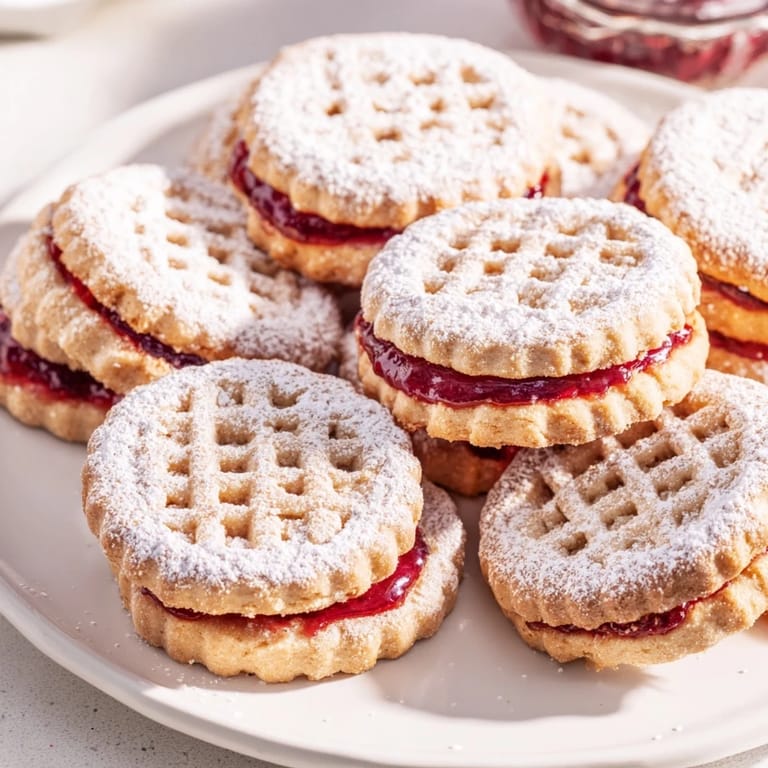
 There's something about Austrian baking that stops time. Years ago, I watched my neighbor arrange Linzer cookies on a delicate porcelain plate, each one a perfect sandwich of butter and jam with that intricate cutout on top, and I understood why these weren't just desserts—they were small edible statements. The tender almond dough, the bright raspberry jam visible through the lattice window, the whisper of cinnamon and lemon zest all working together felt impossibly elegant yet somehow achievable from my own kitchen. I spent an afternoon that winter learning to roll, cut, and layer them, and by teatime, I had a box of cookies that looked like they belonged in a Viennese café.
I brought a tin of these to a friend's holiday party once, nervous because homemade cookies feel vulnerable somehow. They disappeared before the appetizers were done, and a stranger asked me for the recipe—not politely, but with genuine hunger in their voice. That's when I realized these weren't just pretty; they tasted like someone cared, like you'd taken time to dust them with powdered sugar and let the jam set properly before serving them on a proper plate.
Ingredients
- All-purpose flour (2 cups): This is your structure; it keeps the cookies from spreading too much and gives them that signature snap before the tender almond interior hits.
- Almond flour (1 cup finely ground): The secret to their delicate, almost marzipan-like texture—don't skip this or substitute lightly, as it's essential to the character of these cookies.
- Ground cinnamon (1/2 teaspoon): A whisper of warmth that plays beautifully with the raspberry and lemon without announcing itself.
- Salt (1/4 teaspoon): The quiet anchor that makes everything taste more like itself.
- Unsalted butter (3/4 cup, softened): The foundation of everything tender here—cold butter means tough cookies, so let it sit on the counter until it yields to gentle pressure.
- Powdered sugar (2/3 cup for dough): Fine and dissolving, it creams into the butter without the grittiness of regular sugar, keeping the crumb soft.
- Egg yolk (1 large): A binding agent that also enriches the dough without making it cakey, unlike a whole egg would.
- Pure vanilla extract (1 teaspoon): Use real vanilla, not imitation; it matters in something this simple.
- Lemon zest (1/2 teaspoon grated): A tiny jolt of brightness that lifts the whole flavor profile and complements the jam without competing.
- Seedless raspberry jam (3/4 cup): Choose one you'd actually eat from a spoon; this is the star of the show through those cutout windows.
- Powdered sugar (1/4 cup for dusting): A final flourish that makes them look like they came from somewhere special.
Tired of Takeout? 🥡
Get 10 meals you can make faster than delivery arrives. Seriously.
One email. No spam. Unsubscribe anytime.
Instructions
- Prepare your dry mixture:
- Whisk flour, almond flour, cinnamon, and salt together in a medium bowl, breaking up any clumps of almond flour as you go. This ensures the spices and salt distribute evenly so no bite tastes different from another.
- Cream the butter and sugar:
- Beat softened butter with powdered sugar until the mixture is pale and airy, about 2 to 3 minutes—this isn't a quick step, but it's where your cookies get their tender structure. Stop and scrape down the sides halfway through so nothing hides in the corners.
- Bring it together:
- Add egg yolk, vanilla, and lemon zest to the butter mixture, beating until smooth and combined. The mixture should look almost custard-like at this point, rich and glossy.
- Marry the wet and dry:
- Gradually add your dry ingredients, stirring gently until the dough just comes together—overmixing develops gluten and toughens the cookies. Stop as soon as you don't see streaks of flour anymore.
- Chill the dough:
- Divide the dough in half, flatten each piece into a disk, wrap tightly in plastic, and refrigerate for at least 1 hour. This resting time relaxes the gluten and makes the dough easier to work with, less likely to tear when you roll and cut.
- Set up for baking:
- Preheat your oven to 350°F and line two baking sheets with parchment paper. If you skip the parchment, you'll be scraping and cursing yourself halfway through the process.
- Roll out the dough:
- On a lightly floured surface, roll one disk to about 1/8 inch thickness—work patiently and turn the dough occasionally to keep it even. If it softens too much and sticks, pop it back in the fridge for a few minutes.
- Cut the cookies:
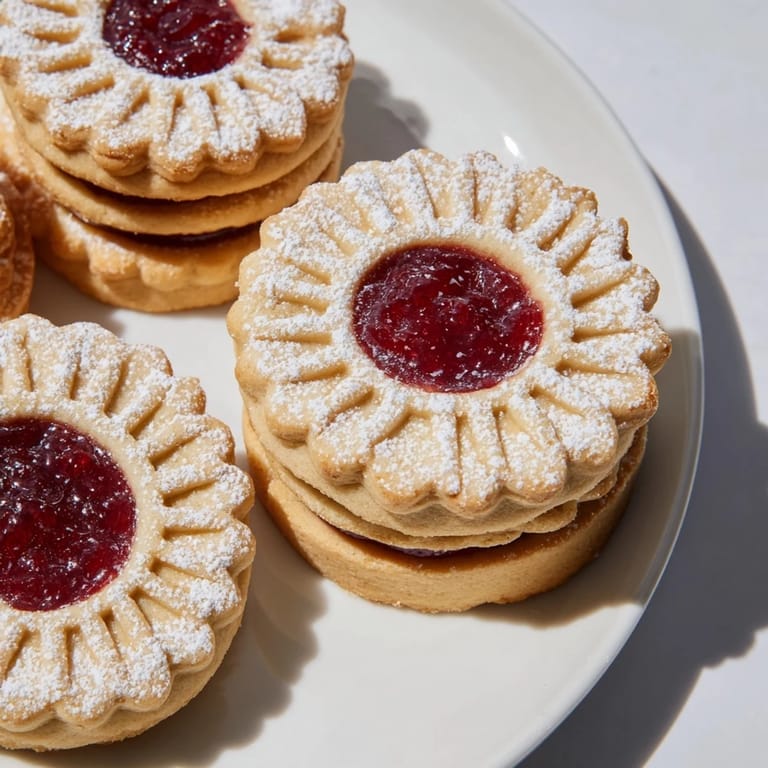
- Use a 2-inch round or fluted cutter to cut out cookies, placing half directly on your prepared baking sheets. With the remaining half of the dough, use a 1-inch cutter to remove centers from each cookie, creating that signature window or lattice effect that makes these unmistakably Linzer cookies.
- Recover your scraps:
- Gently gather all the dough scraps, re-roll them, and cut more cookies—the second roll is just as tender as the first if you're gentle and don't overwork the dough.
- Bake until golden:
- Bake for 10 to 12 minutes, watching until the edges turn lightly golden and the centers look set but still soft to the touch. They'll firm up as they cool, so don't overbake or they'll become brittle.
- Cool with patience:
- Let cookies rest on the pan for 2 minutes so they set enough to move, then transfer to a wire rack to cool completely. This is where your kitchen smells like butter, almonds, and cinnamon all at once—your patience is rewarded.
- Add the finishing touch:
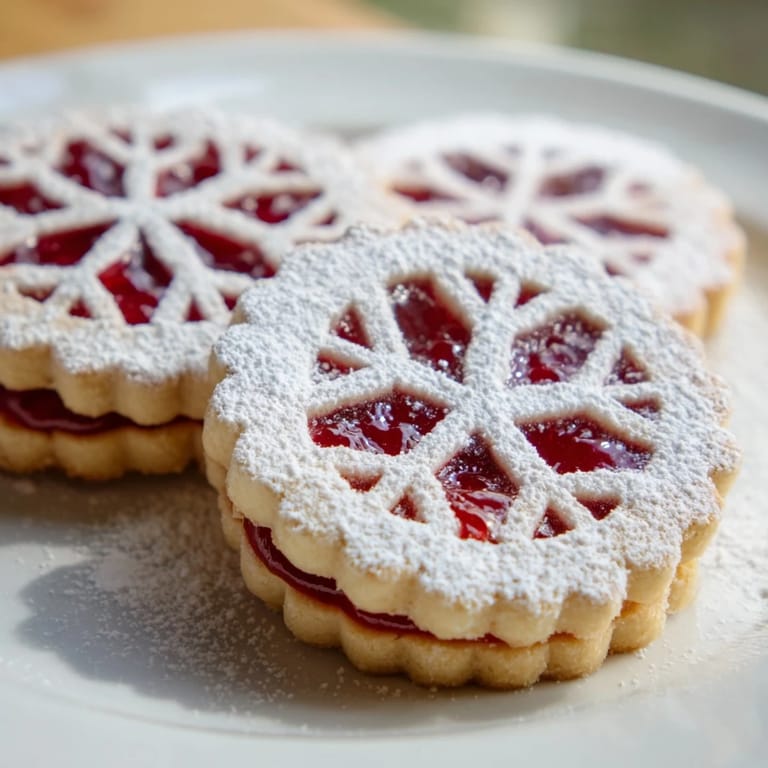
- Once completely cooled, dust the top cookies (the ones with cutouts) generously with powdered sugar for that elegant, snowy appearance. Do this just before assembling so the sugar doesn't dissolve into the jam.
- Assemble the sandwiches:
- Spread about 1 teaspoon of jam on the flat side of each bottom cookie, then press the sugared top gently on top to sandwich them together. The jam will peek through the cutout, creating that stained-glass effect.
- Let them rest and set:
- Allow the assembled cookies to sit for at least 30 minutes before serving so the jam firms up and holds the sandwich intact. Patience here prevents them from falling apart on your plate and looking less beautiful than they are.
 Save to Pinterest
 My sister once served these at her wedding tea, stacked on tiered stands with fresh flowers tucked between them, and watching guests recognize the care in every detail made me understand why this recipe mattered. It wasn't about the complexity—it was about honoring the effort and choosing to make something beautiful when something simple would have sufficed.
Why the Almond Flour Matters So Much
The almond flour isn't just a flavor choice; it's a structural one that changes how the dough behaves. Almonds add fat and richness that butter alone can't quite deliver, creating a crumb that feels luxurious and stays tender even after days in an airtight container. I learned this the hard way when I tried to stretch the recipe by using less almond flour and more all-purpose flour—the cookies turned out cakier and dryer, losing that distinctive tender snap. Now I measure the almond flour carefully and even consider using a food processor to grind blanched almonds fresh if I'm feeling particularly devoted.
The Lemon Zest Secret
That half teaspoon of lemon zest transforms the entire flavor profile in a way that seems impossible until you taste it side by side with a batch made without it. The citrus brightness prevents the cookies from feeling heavy or one-note, and it elevates the raspberry jam so it tastes fresher and more alive. I always zest the lemon directly into the butter mixture rather than zesting ahead of time; the oils stay fresher and more potent, and you avoid that moment where zest dries out sitting in a bowl.
Storage and Serving Wisdom
These cookies are remarkably forgiving once baked and assembled, keeping beautifully in an airtight container for up to five days without losing texture or taste. I've learned that they actually taste slightly better on day two, once the flavors have melded a bit, so baking ahead is not just acceptable but encouraged. Serve them on a proper plate or stand if you can—something about the presentation matters with these cookies, as if they're already dressed up and deserve to be shown off.
- Don't assemble them more than a few hours ahead if your kitchen is warm; the jam can soften the cookies if given too much time.
- If you need to store them longer than five days, freeze the unassembled baked cookies in layers between parchment, then assemble fresh when you need them.
- Pair them with strong black tea, good coffee, or a glass of dessert wine for the full Austrian experience.
 Save to Pinterest
 These cookies are an act of small kindness wrapped in pastry—to yourself, to someone you're feeding, to the tradition they come from. Make them when you want to prove something gentle to yourself, or when you want someone to taste how much you care.
Recipe Questions & Answers
- → What gives Linzer cookies their distinctive taste?
The combination of finely ground almonds and cinnamon in the dough provides a tender texture and a warm, nutty flavor unique to Linzer cookies.
- → How do I achieve the lattice pattern on the cookies?
Use a smaller cutter to remove the centers from half the cookies, creating windowed tops that showcase the raspberry jam filling beneath.
- → Can I substitute raspberry jam with other fillings?
Yes, apricot or blackcurrant jam are delicious alternatives that complement the almond flavors well.
- → Why is chilling the dough important?
Chilling firms the dough, making it easier to roll and cut neatly, while helping maintain the cookie's shape during baking.
- → How should these cookies be stored for freshness?
Store in an airtight container for up to five days to keep the cookies crisp and maintain the jam's quality.
- → Are these cookies suitable for people with nut allergies?
The traditional dough contains almond flour, but you can replace it with additional all-purpose flour to make a nut-free version.