 Save to Pinterest
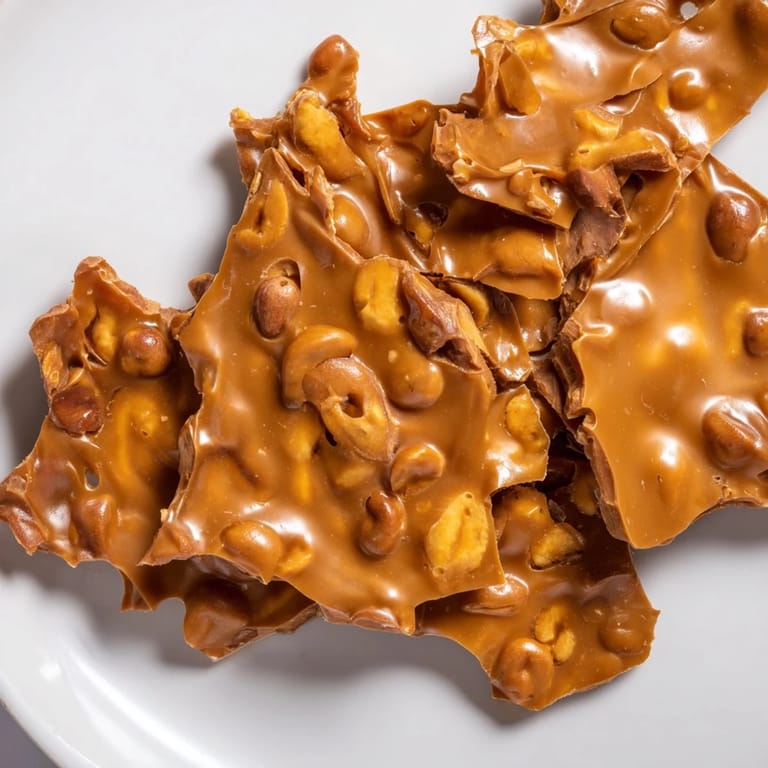
 The first time I made peanut brittle, my kitchen filled with this caramelizing sweetness that made my whole apartment smell like a carnival. I wasn't expecting the baking soda to create that dramatic foam—it startled me so much I nearly dropped the pan. But that bubbling, that lightening of color, that's when I knew I'd gotten it right. Now whenever I make it, I chase that exact moment, that split second where chemistry becomes candy.
I made this for my neighbor last winter during the holidays, and she ate half the batch before dinner. She came back the next day asking if I could teach her. We stood in my kitchen with our candy thermometer, watching the sugar turn from clear to amber, and I realized this simple candy carries a kind of magic—it brings people back for more.
Ingredients
- Granulated sugar: The foundation of your toffee, it transforms into glossy amber when heated to the hard crack stage—use fresh sugar for the cleanest flavor.
- Light corn syrup: This prevents crystallization and keeps your brittle smooth instead of grainy, so don't skip it.
- Water: Just enough to dissolve the sugar and get the cooking process started.
- Salt: A tiny pinch that makes everything taste more like itself, more intentional.
- Unsalted butter: Cut into pieces so it melts quickly when you add it off heat—salted butter throws off the balance.
- Vanilla extract: A whisper of warmth that deepens the caramel without being obvious.
- Roasted, unsalted peanuts: Roasted peanuts have already developed their flavor, so they stay vibrant and crunchy throughout the candy.
- Baking soda: This is your secret weapon—it reacts with the hot sugar to create that light, airy texture and gorgeous color shift.
Tired of Takeout? 🥡
Get 10 meals you can make faster than delivery arrives. Seriously.
One email. No spam. Unsubscribe anytime.
Instructions
- Set up your workspace:
- Line your baking sheet with parchment paper and give it a light grease. You'll need everything ready because once the sugar reaches temperature, you're working against the clock. Have your candy thermometer within reach and your ingredients measured and waiting.
- Combine and dissolve:
- In a heavy saucepan over medium heat, stir the sugar, corn syrup, water, and salt just until the sugar dissolves into a clear liquid. Once it's dissolved, stop stirring—let the heat do the work from here on.
- Boil to hard crack:
- Clip your candy thermometer to the pan and watch the mixture climb from 230°F upward. Around 300°F, the sugar becomes deep amber and brittle when cooled. This takes about 10 to 15 minutes, and you'll watch it go from pale gold to rich caramel to that dangerous amber that means it's ready.
- Add butter and vanilla:
- The moment you hit 300°F, pull it off heat immediately. Stir in the butter and vanilla quickly—they'll melt right into the hot sugar and create this silky mixture. Work fast but don't panic.
- Toast the peanuts:
- Add all your peanuts and stir them in until every one is coated in that glossy toffee. Listen for the change in sound as the sugar clings to each nut.
- The magic moment:
- Add the baking soda and stir briskly. The mixture will immediately start to foam and lighten, becoming airier and almost mousse-like. This is exactly what you want—it means your brittle will be light and crispy, not dense.
- Spread and set:
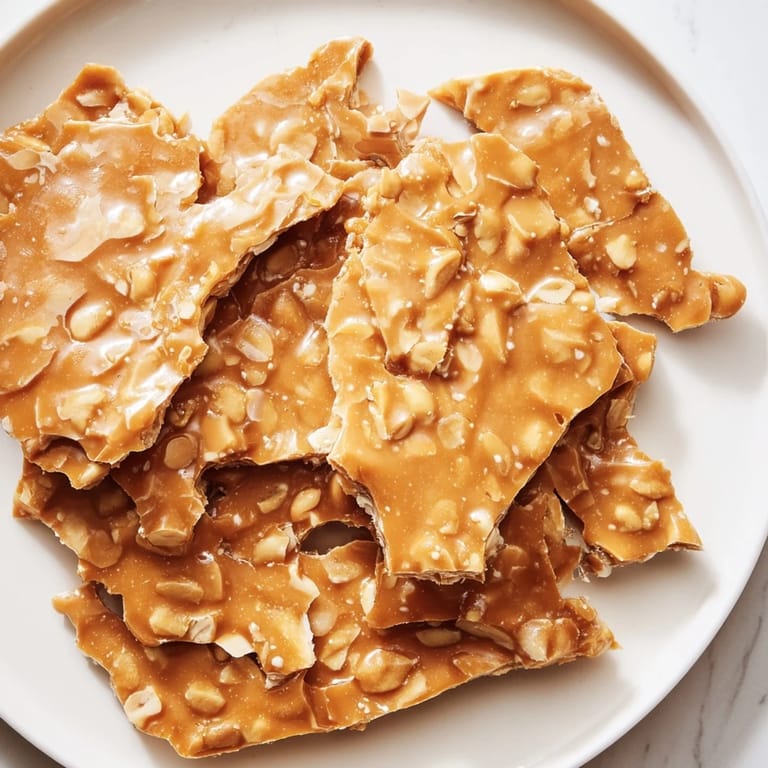
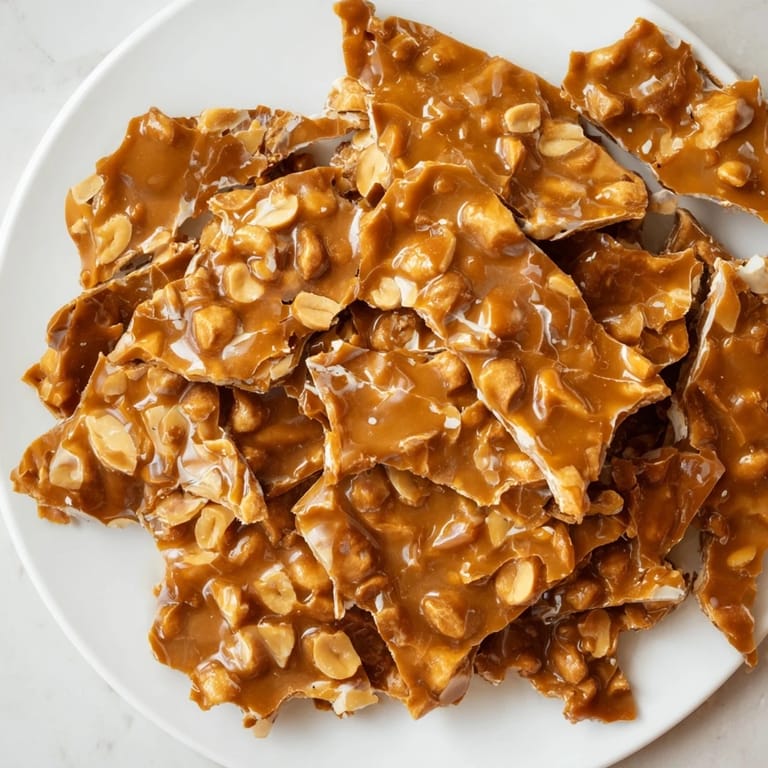
- Pour everything onto your greased sheet immediately and use a greased spatula to spread it thin and even, about 1/4 inch thick. Work quickly but gently—you're not compressing it, just evening it out. Let it cool completely, about 30 minutes, then break it into jagged, irregular pieces.
 Save to Pinterest
 I burned a batch once because I got distracted and the sugar kept climbing past 300°F. That scorched, bitter candy taught me more than any perfect batch ever could—sometimes the mistakes teach you to stay present. Now I set a timer and keep my eyes on that thermometer like it's the only thing that matters.
Temperature Is Everything
The difference between soft and hard crack stages is just a few degrees, and it completely changes what you end up with. At 270°F you get chewy toffee; at 300°F you get crispy brittle. A candy thermometer isn't a suggestion—it's your only reliable guide because neither your eyes nor your timing will be as honest as that dial.
The Peanuts Make the Difference
Roasted peanuts are crucial here because they've already developed their oils and flavors. Raw peanuts would taste flat and slightly bitter in the finished candy. If you can find high-quality roasted peanuts from a good source, you'll taste the difference—they bring an almost buttery depth that budget peanuts never quite deliver.
Storage and Variations
Store your brittle in an airtight container at room temperature, away from humidity—it gets soft and sticky in dampness. The beauty of this recipe is how easily you can adapt it. Cashews bring elegance, almonds add an almost floral note, and pecans make it feel richer and more autumnal.
- For extra saltiness, sprinkle flaky sea salt over the brittle while it's still warm and slightly sticky.
- You can press the brittle into a thinner, more uniform layer if you prefer larger pieces when you break it up.
- Double-wrapped in parchment and then foil, brittle keeps for up to two weeks and makes a stunning homemade gift.
 Save to Pinterest
 Peanut brittle is proof that patience and attention to detail transform simple ingredients into something that tastes like celebration. Once you've made it, you'll make it again and again.
Recipe Questions & Answers
- → What temperature is needed for toffee hard crack stage?
The sugar mixture should reach 300°F (150°C) to achieve the hard crack stage, creating a crisp texture.
- → Can I use other nuts instead of peanuts?
Yes, you can substitute peanuts with cashews, almonds, or pecans for a different twist on flavor and texture.
- → Why is baking soda added to the mixture?
Baking soda creates bubbles, causing the brittle to foam and become lighter and crispier when cooled.
- → How should peanut brittle be stored?
Store in an airtight container at room temperature to keep it crisp and fresh for up to two weeks.
- → What tools are essential for making this candy?
A heavy-bottomed saucepan, candy thermometer, baking sheet, parchment or silicone mat, and greased spatula are needed for best results.