 Save to Pinterest
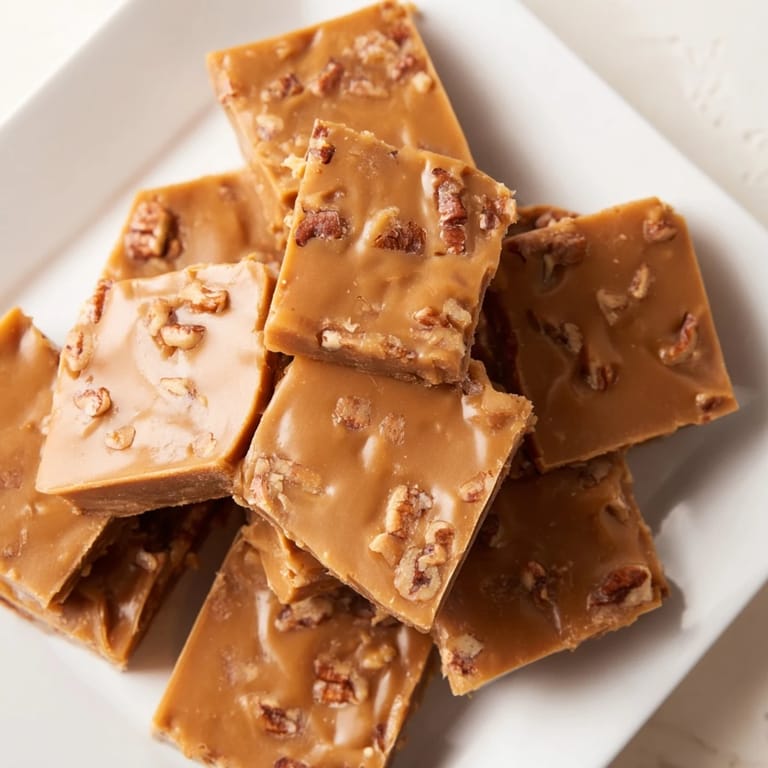
 Penuche fudge materialized in my kitchen on a gray November afternoon when I was trying to recreate something my grandmother kept in a tin on her pantry shelf. I'd watched her make it once as a kid but never quite captured that rich, almost buttery brown sugar depth until I stopped overthinking the candy thermometer and learned to trust the soft-ball stage. Now whenever I make a batch, the smell of caramelizing brown sugar and butter fills the house in a way that feels like an apology and a celebration all at once.
I brought a box of these to a potluck last spring and watched three different people come back for seconds within an hour, which tells you everything about how unassuming but quietly addictive this fudge really is. One neighbor actually asked if I'd bought them from some fancy candy shop, and I couldn't stop smiling about that.
Ingredients
- Light brown sugar (2 cups, packed): This is where all the flavor lives—don't skip it or substitute regular brown sugar, because the molasses content is what gives penuche its soul.
- Granulated sugar (1 cup): Balances the brown sugar and helps you hit the right texture when cooked to soft-ball stage.
- Whole milk (3/4 cup): Creates the creamy texture; whole milk matters here because anything less fat will leave you with grainy fudge.
- Unsalted butter (1/2 cup): Cut it into cubes so it melts evenly without hot spots in the pan.
- Fine sea salt (1/4 tsp): A pinch that makes everything taste more like itself.
- Pure vanilla extract (1 1/2 tsp): Added after cooking so the heat doesn't steal its subtlety.
- Pecans or walnuts (1 cup, chopped, optional): Toast them lightly first if you have time—it deepens their flavor and gives the fudge a pleasant crunch.
Tired of Takeout? 🥡
Get 10 meals you can make faster than delivery arrives. Seriously.
One email. No spam. Unsubscribe anytime.
Instructions
- Prep your pan like you mean it:
- Line your 8-inch square pan with parchment paper, letting it hang over the edges, then lightly butter the paper so the fudge slides out cleanly later. This step saves you from frustration.
- Combine and heat with patience:
- In a heavy-bottomed saucepan, stir together brown sugar, granulated sugar, milk, butter, and salt over medium heat until the sugars completely dissolve and small bubbles start dancing across the surface. You'll smell the butter beginning to brown at the edges—that's exactly right.
- Cook to soft-ball stage without stirring:
- Clip your candy thermometer to the pan and let it cook undisturbed for about 10 to 12 minutes until it reaches 238°F. Resist the urge to stir or prod at it; the mixture needs to cook evenly.
- Let it cool and gather itself:
- Remove from heat and let it sit undisturbed for 10 minutes—this resting period matters more than it looks.
- Beat until it loses its shine:
- Stir in the vanilla, then beat with a wooden spoon or electric mixer on low speed for about 5 to 8 minutes until the mixture thickens, turns matte instead of glossy, and begins to hold its shape when you lift the spoon. You'll feel the moment it's ready.
- Fold in nuts if using:
- Gently stir in toasted nuts if that's your style, working quickly because the fudge sets fast once you stop beating it.
- Pour and set:
- Immediately scrape the fudge into your prepared pan and smooth the top with a spatula, then let it sit at room temperature for at least an hour until it's completely firm.
- Cut into squares:
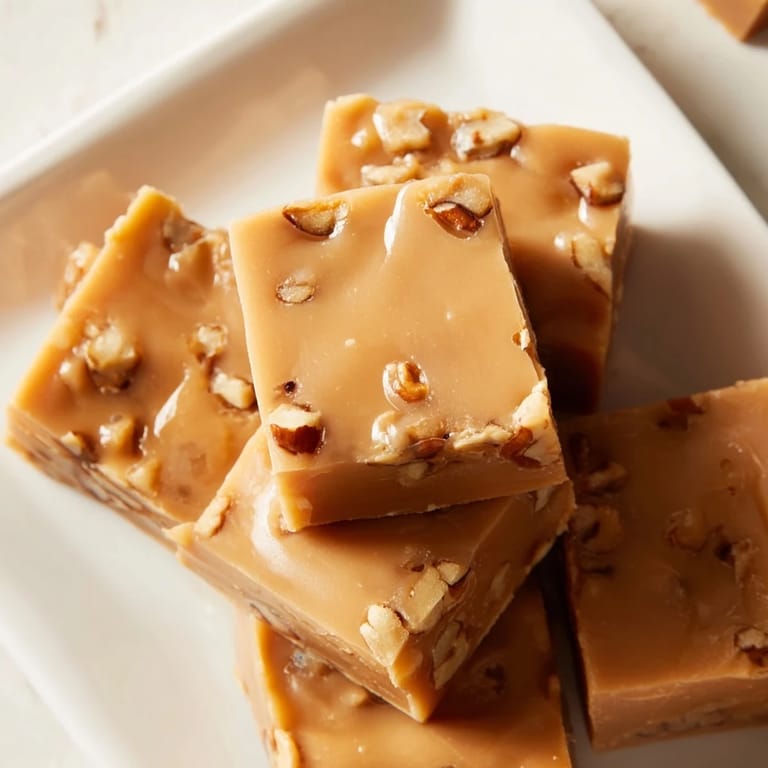
- Lift the fudge out using the parchment overhang and cut into 1-inch squares with a sharp knife, wiping the blade between cuts for clean edges.
 Save to Pinterest
 I realized this fudge had become something special to me when a friend mentioned craving it months after I'd given her a box, and suddenly it wasn't just candy anymore—it was proof that I could make something people actually thought about. That matters in its own quiet way.
Why Heavy-Bottomed Pans Actually Make a Difference
The first time I made penuche in a thin saucepan, the bottom scorched while the top barely reached temperature, and I learned the hard way that candy-making demands even heat distribution. A heavy pan spreads warmth evenly and keeps hot spots from ruining your work, which is why it's worth finding one that fits comfortably on your burner.
The Science of Beating and Why Timing Is Everything
The beating step is what separates smooth fudge from grainy fudge, and it happens because you're breaking down sugar crystals while the mixture cools just enough to thicken. If you beat too early, it stays liquid; if you wait too long, it hardens in the pot and you're left with something unusable. The trick is watching the gloss fade and feeling the resistance increase under your spoon or beaters.
Storage, Gifting, and Flavor Variations
Penuche keeps beautifully in an airtight container at room temperature for up to a week, and it actually improves slightly as the flavors settle and become more rounded. If you're feeling adventurous, a tiny pinch of cinnamon or a dash of maple extract added with the vanilla gives it unexpected depth without changing what makes it itself. Pack it in pretty boxes with parchment between layers, and you have a gift that feels personal and handmade in the best way.
- A nut-free version works just as well—the brown sugar and butter are carrying all the flavor anyway.
- Cut the squares while the fudge is still slightly cool and firm but not rock-hard, which makes cleaner cuts.
- If you live somewhere humid, store the fudge in the coldest part of your kitchen to keep it from softening.
 Save to Pinterest
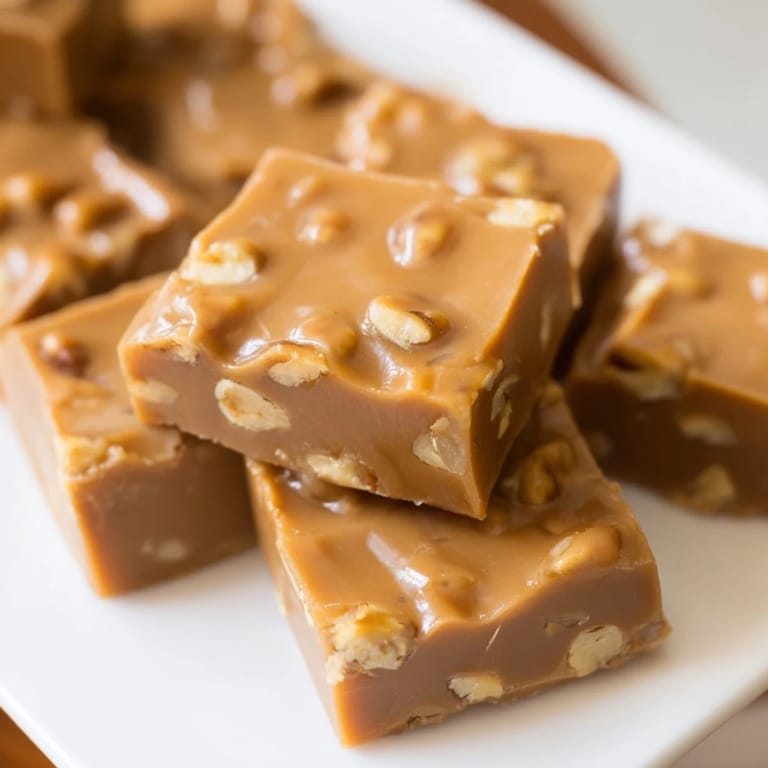
 Penuche fudge is one of those recipes that teaches you something each time you make it, whether it's patience, attention to detail, or the simple joy of feeding people something they'll remember. That's reason enough to keep making it.
Recipe Questions & Answers
- → What type of sugar is used to make this confection?
Light brown sugar and granulated sugar are combined to create the rich caramel flavor and smooth texture.
- → Can nuts be added to the penuche?
Yes, chopped pecans or walnuts can be folded in to add texture and nutty richness, but they are optional.
- → How is the correct cooking temperature determined?
A candy thermometer is used to reach the soft-ball stage at 238°F (114°C), crucial for the right consistency.
- → What is the ideal texture to look for after beating the mixture?
The mixture should thicken, lose its gloss, and begin to hold shape, indicating readiness for pouring.
- → How should the confection be stored after preparation?
Keep in an airtight container at room temperature to maintain freshness for up to one week.
- → Are there variations for seasoning the sweet?
Optional additions like cinnamon or maple extract can enhance the flavor profile subtly.